7 Mistakes That Make Open Water Feel Colder Than It Actually Is
Quick Answer: Water temperature peaks in late summer, not midsummer, so early autumn swims happen in the warmest water of the year. What makes them feel colder is the air, the wind, the entry, the pace, and the recovery - five things you control - plus two habits that quietly shorten every swim. Fix the exit and the entry before you buy a thicker wetsuit.
The lake is warmer this week than it was in June. The thermometer says so.
And yet you are getting out after fifteen minutes when you were doing forty a month ago, and it genuinely feels colder, which makes no sense until you look at everything except the water.
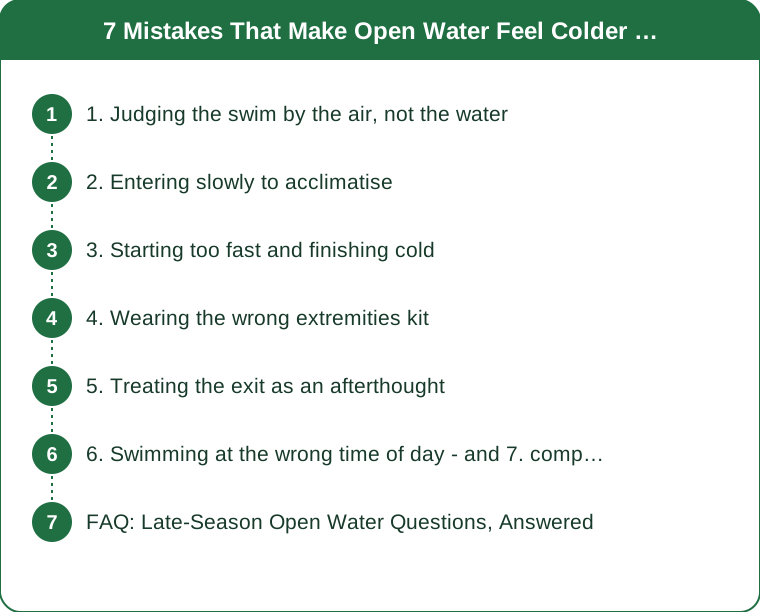
1. Judging the swim by the air, not the water
Water temperature lags air temperature by weeks because water has enormous thermal mass. A lake that peaks in mid to late August is still close to its peak in the second week of September, even after the air has dropped ten degrees.
So the swim itself is barely different. What changed is the walk to the water, the two minutes standing on the bank, and everything after.
This matters because your perception of the swim is set in the first thirty seconds, and those thirty seconds are now spent cold before you are wet. You enter with skin that is already chilled and a body already redirecting blood inward, and the water feels correspondingly colder than the same water did in July.
The fix is boring and works: arrive warm, stay warm on the bank, and get in promptly. Standing around in a swimsuit in a breeze for ten minutes chatting is the single most common way people ruin a late-season swim before it starts.
2. Entering slowly to acclimatise
The advice to enter gradually is well meant and it is often the wrong instruction for water in the sixties.
A slow entry extends the period where you are partly wet and standing in air, which is the coldest phase. It also prolongs the cold shock response - the gasp and the elevated heart rate - rather than getting through it.
A steady, committed entry that gets your shoulders under within about twenty seconds, followed by controlled breathing and a slow first minute of easy swimming, works better for most people at these temperatures.
The important part is not speed, it is the breathing. Get in, stop, float or tread, and take a full minute to bring your breathing under control before you swim properly. People who dislike late-season swims almost always start swimming hard while still gasping, which sets the tone for everything that follows.
Cold water carries genuine risk and this is general information rather than personal advice - if you have a heart condition or are new to open water, swim with others and take guidance from a coach or a local group.
3. Starting too fast and finishing cold
A hard start feels warming and costs you later.
Swimming hard early raises your heart rate before your breathing is settled, burns through the initial adrenaline, and then leaves you at a lower effort for the back half of the swim - which is when your body has cooled and needs the heat production most.
A negative split works far better in cool water. Easy for the first five minutes, building to your strongest effort in the last third. You finish warm rather than finishing cold, and the whole swim reads as pleasant in memory.
This is also the single easiest change to make. It costs nothing, requires no equipment, and typically adds ten or more minutes to how long a swim feels comfortable.

4. Wearing the wrong extremities kit
Heat loss from the head, hands, and feet is disproportionate to their size, and these are the last things people buy.
A silicone cap over a neoprene cap costs very little and makes a substantial difference to how long a swim feels good. Neoprene socks and gloves matter more than a thicker wetsuit for most people in the sixties, because they address where the cold is actually being felt.
The tell is which body part you notice first. If it is your hands and feet, no amount of core insulation will fix it. If it is your torso, that is a wetsuit thickness or fit question.
A badly fitting wetsuit flushes cold water through continuously and is worse than no wetsuit for warmth in some cases - if water is moving in and out at the neck or the back zip, the suit is not doing its job regardless of thickness.
5. Treating the exit as an afterthought
This is the biggest one, and it is where most late-season swims are actually ruined.
Your core temperature continues to fall after you get out - the after-drop - and it can keep falling for twenty to thirty minutes. That means the coldest you will feel is not in the water and not on the bank, but somewhere on the drive home, which is why people remember the swim as colder than it was.
Have the exit set up before you get in: a changing robe or towel within arm’s reach, dry clothes in order, a hat, and something warm to drink. Get the wet kit off immediately rather than standing about, and put a hat on first.
Do not have a hot shower straight away. It feels wonderful and it rewarms the skin far faster than the core, which can worsen the after-drop. Warm layers and a warm drink are the better sequence.
6. Swimming at the wrong time of day - and 7. comparing yourself to July
In autumn the air is coldest at dawn and the water has had all night to lose heat at the surface, while the afternoon offers the warmest air of the day and often the warmest surface water.
Morning swims are peaceful and they are also the version of the same swim that will feel coldest. Moving a late-season swim from 7am to 4pm can be the difference between fifteen minutes and forty, with no change to the water temperature you actually swim in beyond a degree.
Wind matters as much as time. A sheltered spot on a breezy day is a bigger win than a warmer day at an exposed one, because the wind is acting on you before and after the swim rather than during it.
7. Comparing yourself to your July self
This is the mistake that ends seasons.
Your July swims happened with warm air, warm skin, and full acclimatisation to summer conditions. Comparing a September swim to that and concluding you have lost fitness or nerve is both inaccurate and demoralising.
Late-season swimming is a different activity with a different set of durations, and shorter swims done consistently through September and October are what build the acclimatisation that makes November swimming possible for those who want it. The people who swim through winter did not do it by holding on to summer distances - they accepted a shorter swim and kept showing up.
Set duration by how you feel at the exit, not by what you did in August. If you are shivering while changing, the swim was too long, and that is information rather than failure.
FAQ: Late-Season Open Water Questions, Answered
When does water temperature actually peak?
For most lakes and coastal water in the northern US, somewhere between mid-August and early September - several weeks after the air peaks, and far later than most people assume. Early autumn genuinely is the warmest water of the year.
Is a wetsuit worth it in September?
It depends on where you swim and how long. Below about 65F most people extend their swim substantially with one. Extremities kit is a better first purchase for shorter swims, and a wetsuit that fits badly is worse than none.
How do I know if I have got too cold?
Shivering that starts while you are still in the water, difficulty with fine movements like zips and buttons, and confusion or slurred speech are all signals to get out, get dry, and warm up gradually. Swim with others in cool water and treat any of these as a reason to end the session immediately.
TL;DR:
- Water peaks in late summer, so early autumn swims happen in the warmest water of the year - the air is what changed.
- Arrive warm, get in promptly, control your breathing for the first minute, and build effort through the swim rather than starting hard.
- Extremities kit beats a thicker wetsuit for most people in the sixties.
- Set the exit up before you get in, skip the hot shower, and stop measuring September swims against July ones.
The water is not colder. Everything around the swim is, and every one of those things is under your control.
Keep Reading
This article is for general informational purposes only and is not medical advice. It is not a substitute for professional diagnosis or treatment. Always consult a qualified healthcare provider about your individual situation, especially before making significant changes to your diet or exercise routine.