7 Pool Workout Mistakes That Waste Your Lap Time Without You Realizing It
Quick Answer: Most wasted pool workout time comes from swimming at one unvarying pace, resting too long between sets, and skipping structure entirely rather than from technique alone — fixing pacing and rest intervals typically improves results faster than fixing stroke mechanics.
Logging laps consistently doesn’t automatically translate into fitness gains if the structure underneath those laps isn’t actually doing anything. Here are the seven most common culprits, in order of how much time they typically waste.

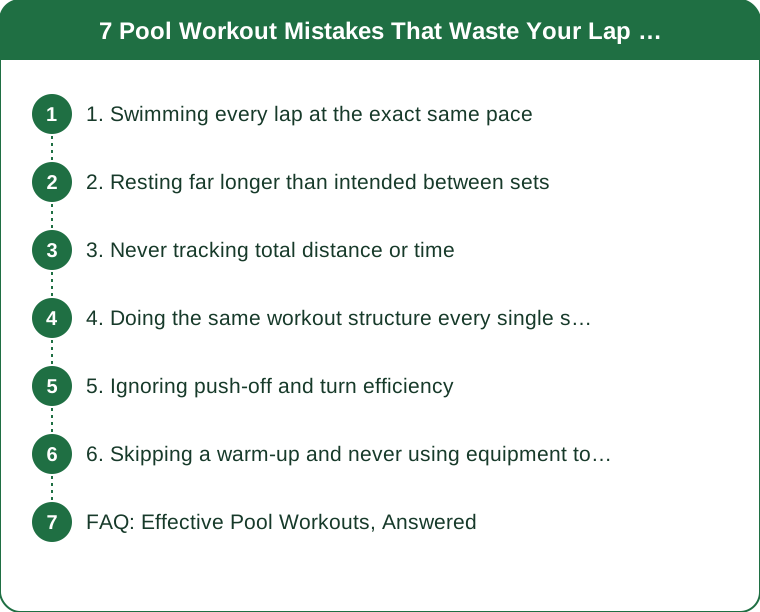
1. Swimming every lap at the exact same pace
Constant, moderate-effort swimming without any pace variation trains only one energy system, which plateaus fast. Structured interval sets — even simple ones like alternating one easy lap with one hard lap — deliver noticeably more fitness improvement per minute in the pool than steady, unvarying laps.
2. Resting far longer than intended between sets
It’s easy to lose track of rest time at the wall without a visible pool clock or watch, and rest periods creep from a planned 20 seconds to a minute or more without realizing it. This alone can turn a 45-minute intended workout into 25 minutes of actual swimming time — bring a waterproof watch or use the pool clock deliberately.
3. Never tracking total distance or time
Without a rough sense of total yardage per session, it’s nearly impossible to know if you’re progressing — many swimmers plateau for months without noticing because there’s no number being tracked to reveal the plateau. A simple lap counter or phone note after each session is enough.

4. Doing the same workout structure every single session
Repeating an identical set week after week (same distance, same stroke, same pace) trains the body to adapt and then plateau at that specific stimulus. Rotating between endurance-focused sessions, interval sessions, and technique-focused sessions across a week produces more consistent progress than one repeated format.
5. Ignoring push-off and turn efficiency
A significant portion of pool time is actually spent at the wall — pushing off and turning, and a weak push-off effectively adds distance you’re not credited for while costing real energy. Practicing a strong streamlined push-off (arms extended, tight body line) a few times each session compounds over a full workout.
6. Skipping a warm-up and never using equipment to target weaknesses
Jumping straight into hard effort without an easy 200-400 yard warm-up set reduces how much hard effort you can sustain later in the workout, since muscles and cardiovascular output haven’t ramped up yet. A genuine warm-up set, not just a couple of easy laps, sets up a measurably stronger main set.
Pull buoys, kickboards, and paddles exist specifically to isolate legs, arms, or catch strength individually — never using them means never directly addressing a specific weak link, like weak kick propulsion, which then continues to slow the whole stroke down indefinitely.
FAQ: Effective Pool Workouts, Answered
How long should a genuinely productive pool workout be?
30-45 minutes of structured swimming (with real intervals and minimal wasted rest) typically produces more benefit than an unstructured 60-90 minute session — structure matters more than raw time in the water.
Do I need a coach to fix these mistakes?
Not necessarily — most of these are fixable with a written workout plan and a watch; a coach or masters swim group helps most with technique-specific issues like push-offs and stroke mechanics.
Is it normal for pool workouts to feel less intense than they should be?
If effort consistently feels too easy, that’s usually a sign of insufficient interval structure or too much rest — both are fixable without changing total time in the pool.
TL;DR:
- Constant unvarying pace and creeping rest times are the two biggest, most invisible time-wasters
- Tracking total distance reveals plateaus that otherwise go unnoticed for months
- Rotating workout structure across the week beats repeating the same set every session
- Push-off efficiency and targeted equipment work address weak links that slow the whole stroke
Most swimmers don’t need to swim more — they need the same time in the water organized with actual structure.
Keep Reading
This article is for general informational purposes only and is not medical advice. It is not a substitute for professional diagnosis or treatment. Always consult a qualified healthcare provider about your individual situation, especially before making significant changes to your diet or exercise routine.