7 Reasons Your Swim Feels Harder in Late Summer Than It Did in June
Quick Answer: Warmer water in late summer is the biggest single factor - a pool that has climbed a few degrees over the season makes heat dumping harder, which raises your heart rate at the same pace. Add accumulated season fatigue, chlorine-degraded goggles and suits, busier lanes, and a subtle drop in hydration, and the same set genuinely costs more. Almost none of it is lost fitness. Check the pool thermometer before you blame your training.
August water is not June water.
And your body notices long before your training log does.

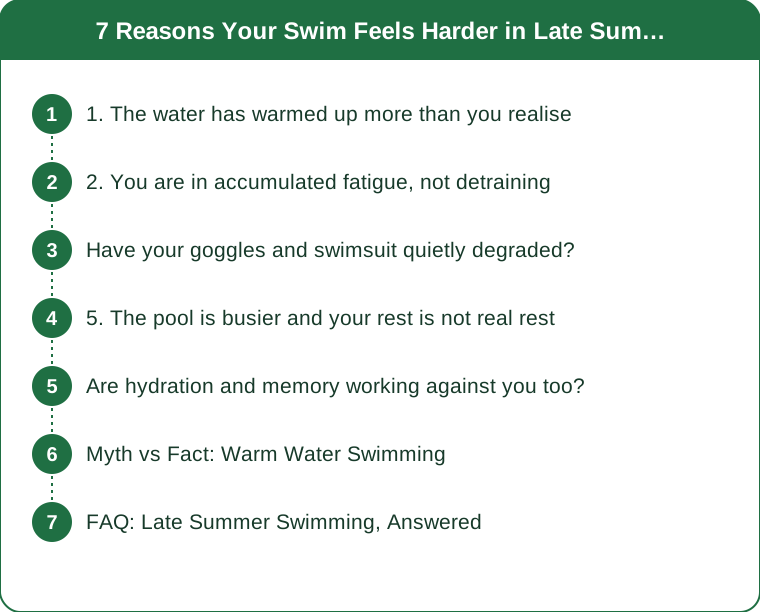
1. The water has warmed up more than you realise
Outdoor and lightly heated pools drift upward across a season, and a pool sitting a few degrees warmer than it was in June changes the whole physiology of a set.
Water is how you dump heat when swimming. In cooler water, the temperature gradient does the work for you. As that gradient shrinks, your body has to move blood to the skin to shed heat - blood that is no longer available to your working muscles.
Which shows up as a higher heart rate at the same pace. Not a small effect: swimmers routinely see a meaningful jump in heart rate for identical splits in warm water.
And it feels like effort, because it is effort. The perceived difficulty is real information, just not about your fitness. Check the posted temperature. A pool at the upper end of comfortable is a genuinely harder pool to train hard in.
2. You are in accumulated fatigue, not detraining
A season of consistent swimming produces real tiredness, and late summer is where it lands.
Training stress accumulates faster than most people track. Weeks of steady work with no genuine down week leaves you performing under a background load. The set feels harder because you are more tired, not because you are less fit.
A reduced week usually fixes it fast. Cut volume by a third to a half for a week while keeping some intensity, and the same set often feels dramatically easier. This is the single most common fix and the one people resist most.
Watch resting heart rate as the tell. A few beats above your normal for several days running usually means accumulated fatigue rather than a training problem.
Have your goggles and swimsuit quietly degraded?
Both do, across a season of chlorine, and both cost you more than you would guess.
3. Your goggles are degraded and you are fighting them
Chlorine breaks down the anti-fog coating and softens the gaskets over a season, and both effects arrive gradually enough that you adapt without noticing.
Fogging costs more than visibility. You lift your head more, your body position drops, and your legs sink - a small technical penalty repeated across every length.
A softened gasket leaks slowly. The constant micro-adjustment and the tension of expecting a leak both add up over an hour. Goggles used regularly in chlorine typically need replacing a few times a year - if you cannot remember when you bought them, that is the answer.
4. Your swimsuit has lost its shape
Elastane degrades in chlorinated water, and a suit worn several times a week for a season sits looser than it did in June.
A loose suit means drag. Fabric that no longer sits flat catches water, and the difference across a long set is real. It also means more adjusting - every tug at a strap is a broken stroke rhythm.
Rinse in cold fresh water immediately after every swim and rotate two suits. This roughly doubles the usable life and is the cheapest performance change available.

5. The pool is busier and your rest is not real rest
Late summer lanes are crowded, and crowded lanes quietly change your session.
Circle swimming with mismatched paces breaks your intervals. You start early, you pause at the wall, you draft when you did not intend to. Your rest intervals stop being the intervals you wrote down.
Passing and being passed costs energy in surges that never appear in your log.
Shift your sessions if you can. Early mornings and the last hour of the evening are consistently quieter. A quiet lane is worth more than a better set.
Are hydration and memory working against you too?
Both quietly, and both are easy to correct once you know they are there.
6. You are slightly more dehydrated than you think
Swimming hides sweat completely, and warm-weather swimming produces plenty of it. You do sweat in the water - you simply cannot see it, and the cooling water removes the thirst signal that would normally tell you.
Starting a session already down from a hot day compounds it. A few percent of body mass lost in fluid produces a measurable drop in performance and a noticeable rise in perceived effort.
Put a bottle on the deck and drink at every set break. Most swimmers drink nothing across an hour and would not consider doing the same in a gym.
7. Your expectations moved without you noticing
Memory keeps peaks, not medians. The June session you are measuring against was probably an unusually good one - cool water, fresh goggles, an empty lane, a rest day behind you.
Look at your actual log rather than your recollection. Most swimmers who feel slower are within a couple of seconds per hundred of where they were, which is noise, not decline.
Retest properly in cooler water in a few weeks. Autumn water plus a reduced week reliably produces times people had convinced themselves were gone.
Myth vs Fact: Warm Water Swimming
Myth: warm water is easier because your muscles are looser. Fact: warm water helps a warm-up and hinders hard work. Loose muscles are pleasant; impaired heat dumping is not, and above a certain temperature the second effect dominates.
Myth: if you are not sweating, you are not losing fluid. Fact: you sweat throughout a swim and the water washes it away instantly. The absence of the sensation is why swimmers under-drink more consistently than any other endurance group.
Myth: a suit only matters for racing. Fact: a stretched suit adds drag and adjusting on every length, both of which cost you across a session. Fit is a training variable, not a race-day one.
Myth: feeling harder means you lost fitness. Fact: perceived effort is heavily influenced by heat, hydration, sleep, and accumulated fatigue. It is a snapshot of today’s conditions, not a measure of your training state.
Myth: you should train through it. Fact: pushing harder into accumulated fatigue in warm water is how a plateau becomes a slump. A reduced week is the faster route forward. If you feel dizzy, get an unusual headache, or stop sweating on land in the heat, get out and get assessed. This is general information, not medical advice.
FAQ: Late Summer Swimming, Answered
What water temperature is actually best for hard training?
Most competitive pools sit in a fairly cool band precisely because hard efforts generate a lot of heat. Recreational pools are usually kept several degrees warmer for comfort, which is pleasant for easy swimming and genuinely limiting for intervals.
Should I just swim less in late summer?
Swim the same frequency, but shift one session to easy technique work and take one reduced week. Frequency maintains feel for the water; volume is what you can afford to trim.
How do I know if it is fatigue or something else?
Take three easy days. If the same set feels normal afterwards, it was fatigue. If it still feels unusually hard after real rest, and especially if that comes with breathlessness or an unusually high heart rate at easy paces, get it checked properly.
TL;DR:
- Warmer late-summer water is the biggest factor - impaired heat dumping raises heart rate at the same pace.
- Accumulated season fatigue is next; a reduced week usually restores the feeling within days.
- Degraded goggles and a stretched suit both cost you technically and mentally.
- Crowded lanes destroy real rest intervals - shift to a quieter hour instead of pushing harder.
- You are comparing against your best June session, not your average one. Check the log.
Before your next swim, look at the posted pool temperature and write it in your log. Two weeks of that data explains most of what feels wrong.
Keep Reading
This article is for general informational purposes only and is not medical advice. It is not a substitute for professional diagnosis or treatment. Always consult a qualified healthcare provider about your individual situation, especially before making significant changes to your diet or exercise routine.