7 Signs Your Swim Goggles Are About to Leak Mid-Lap (Before It Actually Happens)
Quick Answer: Swim goggles usually show warning signs — a stretched-out strap, a foggy coating that won’t clean off, or a seal that leaves a red mark instead of a clean suction — for 1-2 weeks before they actually leak mid-lap, so catching these signs early saves you a stinging, blurry set.
Goggles that were fine last week suddenly let water in halfway through your warm-up. It feels random, but it almost never is — the seal has usually been quietly breaking down for a while before it actually gives out.
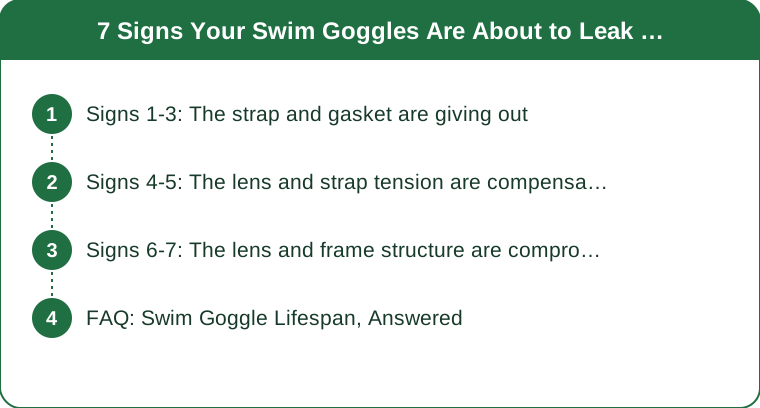
Signs 1-3: The strap and gasket are giving out
1. The strap has lost its snap-back stretch. Silicone straps degrade with chlorine exposure over months of regular use. If you stretch the strap and it doesn’t spring back quickly, it’s no longer holding steady tension against your face — and tension is most of what keeps a seal watertight.
2. The gasket feels sticky or slightly tacky instead of smooth. Run a finger over the silicone or foam gasket that touches your skin. If it feels tacky rather than smooth, the material is breaking down chemically from repeated pool chemical exposure, and it will stop conforming evenly to your eye socket.
3. You’re leaving a deep red ring instead of a light imprint. A light, even imprint after swimming is normal. A deep, painful red ring in one specific spot (rather than evenly around the eye) usually means the gasket has warped and is over-compressing in one area while gapping in another — that gap is where water gets in.
Signs 4-5: The lens and strap tension are compensating
4. Anti-fog coating won’t come back no matter what you do. New goggles fog less because of a factory anti-fog coating that wears off over 3-6 months of regular chlorine exposure. Once fogging returns even after cleaning and drying between uses, the lens surface itself has degraded, which often coincides with gasket wear too.
5. You’re tightening the strap more than you used to. If you find yourself cranking the strap tighter every few sessions just to get the same seal, the gasket has lost its natural compression and is compensating with more direct pressure — which usually fails faster, not slower.
Signs 6-7: The lens and frame structure are compromised
6. There’s visible clouding or scratching on the lens itself. Scratches don’t cause leaks directly, but a lens surface degraded enough to scratch easily has usually also lost its factory shape slightly, which can throw off how evenly the frame seals against your face.
7. The nose bridge piece has cracked or feels loose. A cracked or loose nose bridge changes the tension distribution across both lenses. Even if each side seals fine on its own, a compromised bridge often causes one side to leak intermittently, especially during flip turns.
FAQ: Swim Goggle Lifespan, Answered
How long should a pair of swim goggles actually last?
With regular pool use (3-5 sessions a week), most goggles last 3-6 months before the gasket noticeably degrades — daily swimmers often replace them closer to the 3-month mark.
Does rinsing goggles after every swim extend their life?
Yes, meaningfully — rinsing removes chlorine residue that otherwise sits on the gasket and speeds up material breakdown, so a quick freshwater rinse after each session adds real weeks of life.
Is a leak always the goggles’ fault, not fit?
Not always — if goggles are brand new and still leak, it’s more likely a sizing or fit mismatch than product failure, so try a different frame shape before assuming a defect.
TL;DR:
- Leaks rarely happen out of nowhere — a degrading strap, tacky gasket, or uneven red mark usually shows up 1-2 weeks first
- Anti-fog wearing off often coincides with gasket wear, not just lens aging
- A cracked nose bridge can cause one-sided leaks even when each lens seals fine alone
- Rinsing goggles after every swim meaningfully extends how long the gasket lasts
Check your goggles for these 7 signs before your next set — a $15 replacement beats a blurry, stinging 1000 meters.
Keep Reading
This article is for general informational purposes only and is not medical advice. It is not a substitute for professional diagnosis or treatment. Always consult a qualified healthcare provider about your individual situation, especially before making significant changes to your diet or exercise routine.