7 Things Nobody Tells You About Swimming Outdoors in Late Summer
Quick Answer: Late-summer water is at its annual peak temperature because water lags air by roughly six weeks — which makes swimming comfortable but also means algae is at its densest, daylight is shrinking fast, and the water-to-air temperature gap flips. Getting out into cooler evening air is now the risky part of the swim, not getting in.
The water has never felt better.
The getting out has never felt worse.
That reversal is the whole story of late-summer swimming, and it catches out people who have swum all season.

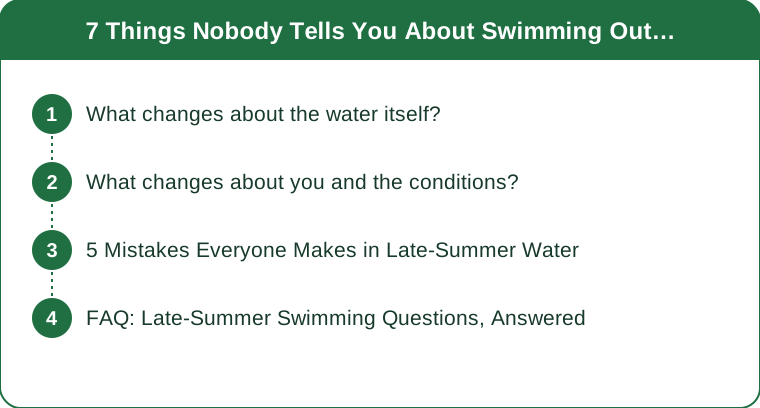
What changes about the water itself?
1. The water is at its warmest right now, not in July
Water has enormous thermal mass, so it warms and cools far more slowly than air. Lakes and coastal water typically peak four to six weeks after the air temperature peak — which puts the annual maximum in mid-to-late August or even early September in many places. If you have been avoiding open water because it felt cold in June, this is the fortnight it is easiest.
2. Algae peaks with the water temperature
Warm, still, nutrient-rich water in late summer is exactly what cyanobacteria want. Blooms look like green paint, blue-green scum, or a soupy discolouration near the downwind shore, and some produce toxins that cause rashes, stomach upset and worse in dogs. If the water looks like pea soup or has a visible surface scum, do not swim. Check local water quality notices before travelling, since blooms can appear within days.
3. Thermoclines get sharper, not softer
The surface is warm, and a metre or two down the water can be dramatically colder. A sharp thermocline in late summer catches people who dive or who swim into deeper water mid-lake and hit a cold layer without warning. Enter feet first, and treat the surface temperature as information about the surface only.
4. Water clarity often drops
Algal growth and late-summer runoff reduce visibility. Lower clarity means you spot hazards later and lose your sighting references sooner, which matters more than it sounds when you are swimming a line rather than following a lane.
What changes about you and the conditions?
5. The air is now colder than the water, and that flips the risk
All season, getting in was the shock. In late August and September, the water holds its heat while evening air drops fast. You finish a swim comfortable and then lose heat rapidly standing on a bank in a wet costume with a breeze on you. This is afterdrop, and it arrives ten to twenty minutes after you exit, not immediately. Have a warm layer, a hat and a hot drink ready before you get in, and get dressed faster than feels necessary.
6. Daylight is disappearing about two minutes a day
Mid-August to late September loses roughly an hour of evening light per fortnight in temperate latitudes. The after-work swim that ended in daylight in July finishes in dusk by early September. Dusk swimming means poor visibility to boat traffic, harder sighting and a much colder exit. Move sessions earlier rather than shortening them.
7. Your acclimatisation is about to expire
Cold tolerance built over a summer fades within a couple of weeks without exposure. People who stop swimming in September and return in October find the water genuinely harder than the temperature drop alone explains. If you intend to swim into autumn, the trick is not to stop — regular short swims through the transition preserve adaptation far more effectively than a break followed by a restart.

5 Mistakes Everyone Makes in Late-Summer Water
Mistake one: dressing for the water instead of the exit. The swim is the comfortable part. Pack for standing wet in a breeze at 17C, because that is the part that actually chills you.
Mistake two: judging depth temperature from the surface. Late-summer thermoclines are sharp. Surface warmth tells you nothing about what is a metre down.
Mistake three: ignoring green water because it looked fine last week. Blooms develop in days, not months, and are worst on the downwind shore where the wind concentrates them.
Mistake four: a hot shower straight after. Rapid rewarming of cold peripheries drives cold blood back to the core and can make afterdrop worse. Layers, movement and a warm drink first; shower once you are properly warm.
Mistake five: extending the swim because the water feels great. It does feel great — that is the trap. Warm water disguises how much heat you are losing over a long swim, and the deficit shows up on the bank.
Mistake six: trusting last week’s water quality check. Bloom status, clarity and bacterial counts after heavy rain can all change within a couple of days, and late summer is the most volatile stretch of the year for all three. Look it up the morning you go, not the month you started.
And the bonus one: swimming alone at dusk. Reduced light, reduced visibility to boats, and reduced margin if anything goes wrong. Late-summer evenings are when this changes fastest, and a swim that felt routine at 7pm in July is a genuinely different proposition at 7pm in September — colder air on exit, less light, and fewer people around to notice a problem.
FAQ: Late-Summer Swimming Questions, Answered
When is open water actually warmest?
Usually mid-August to early September in temperate regions, because water lags air temperature by four to six weeks.
How do I know if algae is dangerous?
Assume any green paint-like scum, pea-soup colour or strong musty smell is unsafe. Check local water quality notices, and keep dogs out entirely — they are far more vulnerable.
Why do I feel colder after the swim than during it?
Afterdrop. Cold blood from your limbs returns to your core once you stop and start moving normally, and core temperature keeps falling for ten to twenty minutes after you exit.
Should I take a hot shower immediately?
No. Warm layers, a hat and a hot drink first. A hot shower on cold peripheries can worsen afterdrop.
How much daylight am I losing?
Roughly two minutes a day through September in temperate latitudes, which compounds to an hour a fortnight.
Will I lose my cold tolerance if I stop?
Yes, within a couple of weeks. Keep swimming short and regular through the transition rather than stopping and restarting.
Is a wetsuit worth it this time of year?
For longer swims, increasingly yes as September progresses — not for the water temperature so much as for the total time in it and the buffer it gives you on exit.
TL;DR:
- Open water peaks in temperature now, four to six weeks after the air peak.
- Algae peaks at the same time — green, scummy or soupy water means do not swim.
- The risk has flipped: the exit into cool air is now the dangerous part, and afterdrop arrives 10-20 minutes later.
- Daylight is vanishing at two minutes a day; move sessions earlier rather than shorter.
- Do not stop swimming in September if you want to swim in October — acclimatisation fades in a fortnight.
For your next swim, lay out your dry layers and a hot drink on the bank before you get in. That single habit changes late-summer swimming more than anything else on this list.
Keep Reading
This article is for general informational purposes only and is not medical advice. It is not a substitute for professional diagnosis or treatment. Always consult a qualified healthcare provider about your individual situation, especially before making significant changes to your diet or exercise routine.