7 Things That Happen to Your Body the First Time You Swim Open Water
Quick Answer: Strong pool swimmers are often surprised by open water because cold shock, sighting fatigue, and current drift affect the body in ways a pool never does. Expect a harder first 5 minutes than your fitness level would predict — that’s normal, not a sign you’re unprepared.
You can hold a strong pace for 2000 meters in a pool without thinking twice. Then you get into open water and the first five minutes feel like an entirely different sport. Here’s what’s actually happening to your body.

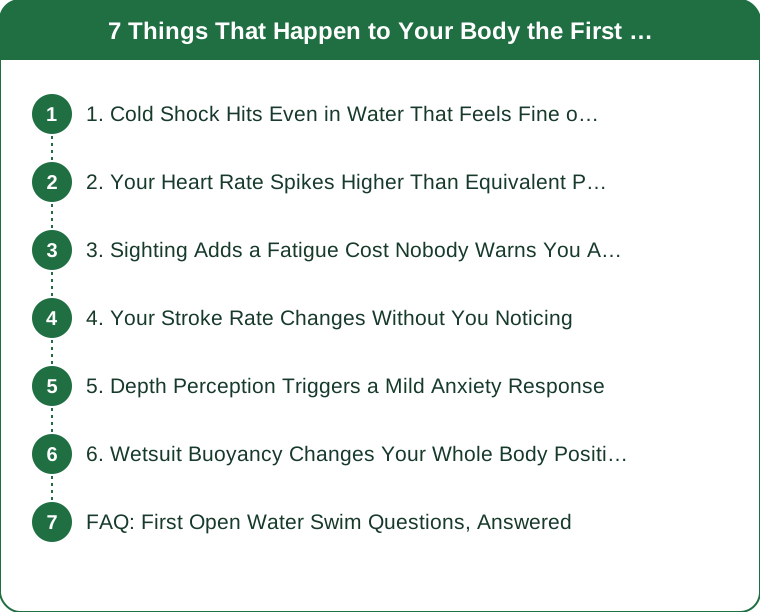
1. Cold Shock Hits Even in Water That Feels Fine on Your Feet
Water that feels tolerable when you wade in can still trigger an involuntary gasp reflex once your chest and torso submerge — a genuine physiological response, not a fitness issue. It typically fades within 60-90 seconds as your breathing settles.
Wading in slowly and splashing your chest and neck before a full submersion blunts this response significantly.
2. Your Heart Rate Spikes Higher Than Equivalent Pool Effort
Between cold exposure and the adrenaline of open water, your heart rate at a given swim pace typically runs noticeably higher than the same effort in a pool. This is expected and settles as your body adapts over the first several minutes.
3. Sighting Adds a Fatigue Cost Nobody Warns You About
Lifting your head to sight a buoy every few strokes — a skill that doesn’t exist in a lane-lined pool — engages your neck and upper back in a way that adds up over distance. New open water swimmers often feel this fatigue before their arms or legs tire.

4. Your Stroke Rate Changes Without You Noticing
Choppier water and the absence of a wall to push off tend to shorten most swimmers’ stroke length and increase turnover rate compared to pool swimming, often without any conscious change — it’s a natural adaptation to less predictable water.
5. Depth Perception Triggers a Mild Anxiety Response
Not being able to see the bottom, even in water you know is safe, activates a mild stress response in many swimmers who’ve only ever swum in pools with a visible floor. This usually fades with repeated exposure and isn’t a sign of a real problem.
6. Wetsuit Buoyancy Changes Your Whole Body Position, and Recovery Hits Differently Too
A wetsuit lifts your hips and legs higher than your natural pool position, which changes your kick mechanics and can feel oddly effortless or oddly restrictive depending on fit — it takes a session or two to stop fighting it.
On top of that, the combined cold exposure, elevated heart rate, and mental effort of sighting and navigating tend to leave open water swimmers more tired afterward than a pool session of equal distance and pace — factor in extra recovery time for your first few outings.
FAQ: First Open Water Swim Questions, Answered
Is it normal to feel panicked the first time?
A racing heart rate and mild anxiety in the first few minutes is common even among strong swimmers — it typically settles once you establish a rhythm and get past the initial cold and depth adjustment.
Should I swim with someone the first time?
Yes — a buddy or a guided group swim is strongly recommended for a first open water session, both for safety and to have someone to pace and sight off of.
How much shorter should my first open water swim be compared to my pool distance?
Cut your usual pool distance by roughly a third to half for a first outing — the added physical and mental load means the same distance will feel considerably harder.
TL;DR:
- Cold shock, elevated heart rate, and sighting fatigue are all normal, expected reactions
- Wade in slowly and splash your chest first to blunt the cold shock response
- Sighting fatigue often outpaces arm or leg fatigue for new open water swimmers
- Wetsuit buoyancy changes your body position and kick mechanics
- Cut your first open water distance by a third to half compared to your pool pace
None of these 7 reactions mean you’re unprepared — they mean you’re adapting to a genuinely different environment, and that adaptation gets faster every session.
Keep Reading
This article is for general informational purposes only and is not medical advice. It is not a substitute for professional diagnosis or treatment. Always consult a qualified healthcare provider about your individual situation, especially before making significant changes to your diet or exercise routine.