7 Things That Ruin a Goggle Seal and the Fix for Each
Quick Answer: Most goggle leaks come from strap tension, sunscreen residue, degraded gaskets, or head position — not from the goggles being the wrong shape for your face. The single most common cause is over-tightening, which deforms the seal and creates the exact gap it was meant to close. Work through the seven below in order and you will usually fix it without buying anything.
You tighten them, they leak. You tighten them more, they leak more and now your eye sockets ache. The tightening is the problem.
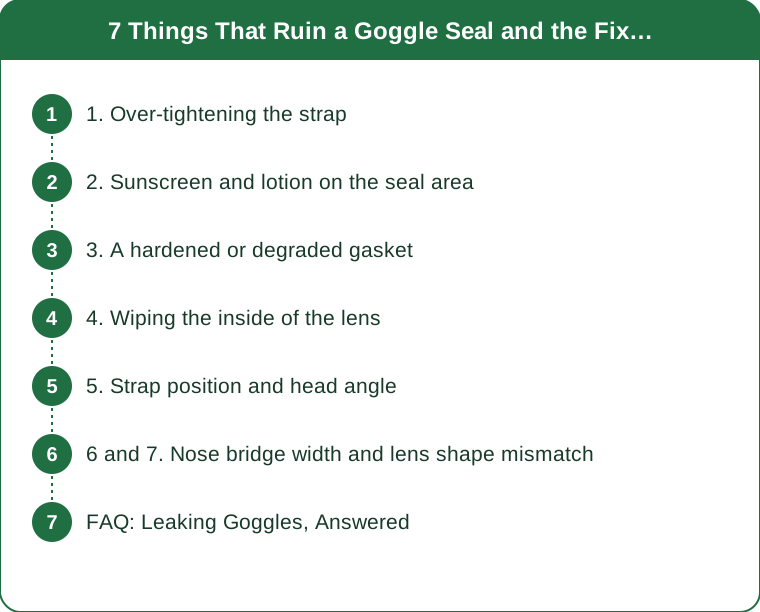
1. Over-tightening the strap
This is the leading cause and it is completely counterintuitive.
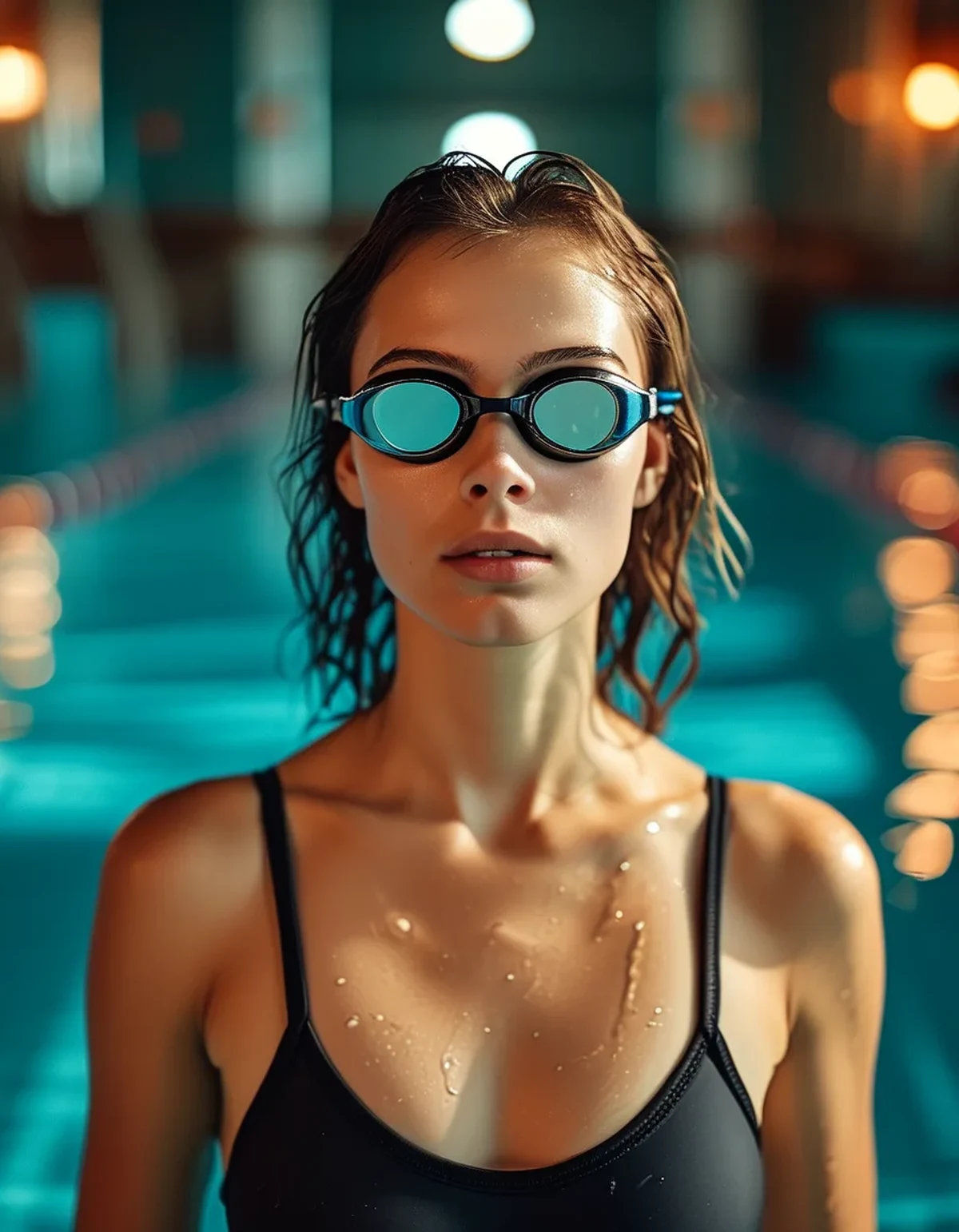
A goggle gasket seals by suction, not by compression. Press the goggles onto dry skin with no strap at all and they should hold for a few seconds on their own. That test tells you the seal is working — the strap’s only job is to keep them in position against water pressure.
When you over-tighten, the soft gasket deforms and folds, and a folded gasket has a crease running through it. A crease is a channel, and a channel lets water in. So the tighter you pull, the more reliably you create the leak.
The fix: loosen the strap until the goggles feel almost too loose, then do the suction test. If they hold on their own, the strap is only holding position and you are done. Most swimmers can drop their strap tension considerably and immediately stop leaking.
And the tell: deep red rings that last more than 20 minutes after you get out mean you are far too tight, regardless of whether they leaked.
2. Sunscreen and lotion on the seal area
Oil breaks suction, and it does it instantly.
Sunscreen, moisturizer, and makeup all leave a film that stops the gasket gripping skin. This is the single most common cause of a leak that appears only in outdoor summer swimming and disappears indoors, which makes it easy to misattribute to the pool or the goggles.
The fix: apply sunscreen everywhere except the gasket path, or wipe that strip clean with a towel corner before you put the goggles on. The eye socket ring is largely shaded by the goggles anyway, so leaving it bare costs you almost nothing.
Same problem, different source: hand cream transfers from your fingers to the gasket while you position them. Rinse your hands first if you have just applied anything.
Also worth knowing: oil residue accumulates on the gasket itself over weeks, which makes the leak progressively worse rather than instant. That belongs to the cleaning fix below.
3. A hardened or degraded gasket
Silicone has a lifespan, and chlorine shortens it.
A new gasket is soft and slightly tacky. An old one is stiff, slick, and sometimes visibly shiny. Stiff silicone cannot conform to the curve of your face, so it seals along part of its path and bridges over the rest.
The fix, when it is grime: wash the gasket with a drop of dish soap and lukewarm water, rub gently with a fingertip, rinse thoroughly. This restores a surprising number of goggles people were about to throw away.
The fix, when it is genuinely hardened: replace them. Most training goggles last roughly 3 to 6 months of regular chlorinated use before the gasket goes, which is far shorter than most people assume. If the silicone no longer feels tacky at all, cleaning will not bring it back.
And the accelerant to avoid: leaving them in a hot car or on a sunny deck. Heat and UV degrade silicone much faster than chlorine does, and a summer of dashboard storage will kill a pair outright.
4. Wiping the inside of the lens
This ruins the anti-fog coating, and the fog then gets blamed on the seal.
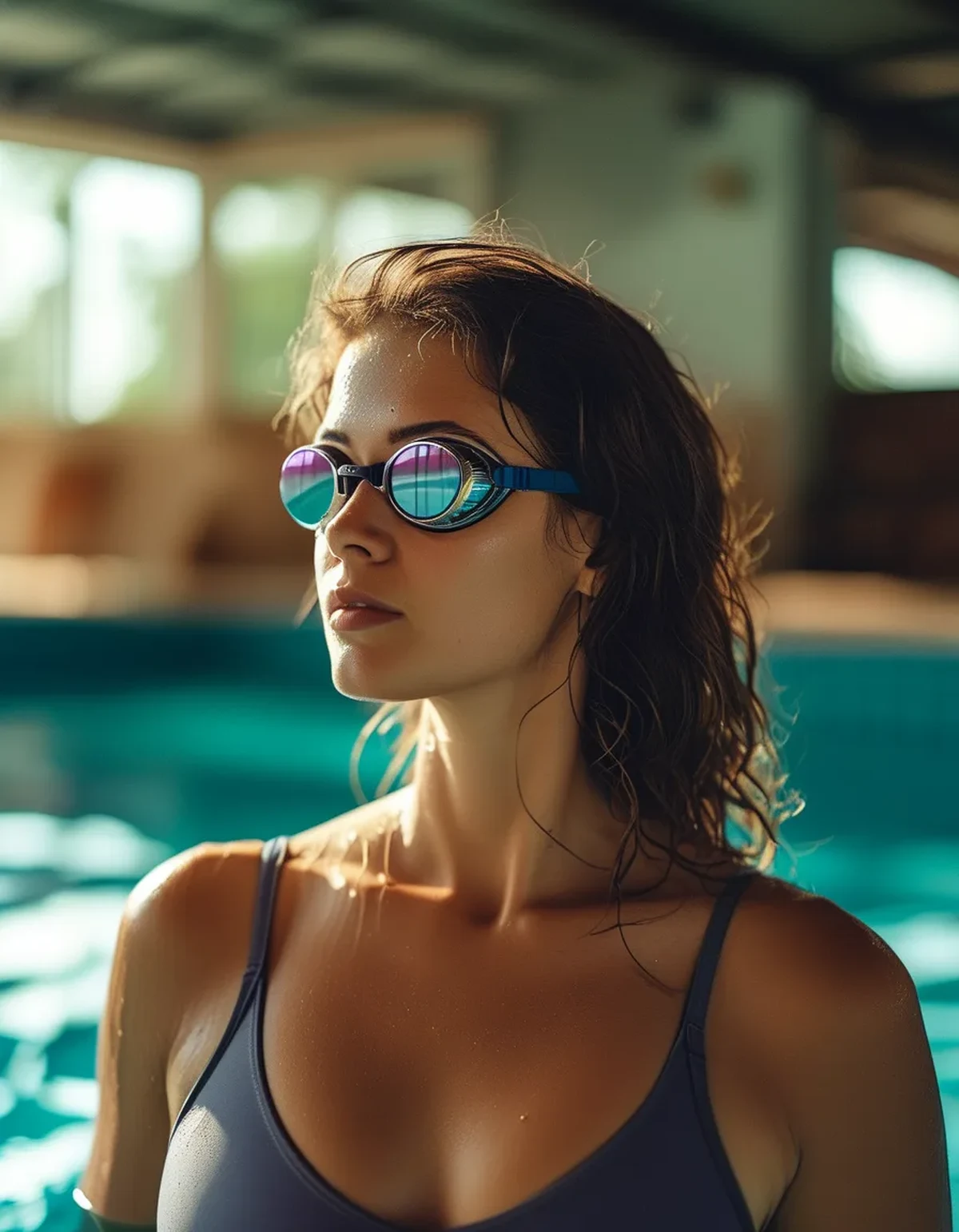
Factory anti-fog is a thin surfactant layer on the inside of the lens, and a fingertip or a towel removes it in one pass. Once it is gone, the lens fogs, you pull the goggles off to clear them mid-set, and each removal breaks and re-forms the seal — which is where the actual leak enters.
The fix: never touch the inside of the lens. Rinse in clean water and let them air dry face up.
When the coating is already gone: a drop of baby shampoo smeared thinly inside and rinsed lightly works, as does a commercial anti-fog drop. Spit works and is the least pleasant option, though it remains the most used one on every pool deck in the world.
And the underlying cause of fogging: the temperature difference between warm skin and cool lens. Fogging gets much worse in cold outdoor water and in winter indoor pools, which is why a pair that was fine in July suddenly is not in October.
5. Strap position and head angle
Two mechanical issues that produce identical symptoms.
Strap too low on the skull. The strap should sit high on the back of the head, roughly level with or slightly above the top of your ears. A strap that has slipped down toward your neck pulls the goggles up and away from the lower gasket, opening a gap under each eye. This is the classic slow leak that fills the bottom of the lens over four lengths.
The fix: reposition it high and, on a split strap, set the upper band slightly tighter than the lower.
Head angle in freestyle. Looking too far forward raises your forehead into the oncoming water, which drives a wedge of water directly at the top gasket. Swimmers who leak only while swimming and never while standing usually have a head-position issue, not a goggle issue.
The fix: aim your gaze at the bottom of the pool a couple of feet ahead of you rather than at the far wall. It fixes the leak and it lowers your legs, which is a free improvement to your body position.
And on push-offs: entering the water forehead-first at speed is the highest-pressure moment in a length. If they leak on the first stroke every time, that is the push-off, not the goggles.
6 and 7. Nose bridge width and lens shape mismatch
The two genuine fit problems, and they are less common than the five above.
6. Wrong nose bridge width. On goggles with interchangeable bridges, the wrong size angles each lens off the orbital bone. Too narrow pulls the lenses inward and lifts the outer edge; too wide splays them and lifts the inner edge. Either one leaks on the side that lifted.
The fix: if one eye leaks and the other never does, suspect the bridge before anything else. Swap to the next size and repeat the suction test on each eye separately, one at a time, with the other closed.
7. Lens shape versus orbital shape. Low-profile racing goggles seal inside the eye socket; training goggles seal on the bone around it. These are different strategies, and racing goggles are considerably less forgiving of any variation in socket depth — which is why they leak for many swimmers who have no trouble with a wider gasket.
The fix: if you have worked through everything above, try a wider-gasket training pair before concluding that goggles hate your face. Most leaking is a maintenance and tension problem, and the minority that is genuinely anatomical is solved by gasket width, not by price.
One last practical note: keep the pair that works and buy a second identical pair rather than experimenting when the first dies. Goggle fit is the least worthwhile thing in swimming to keep re-solving.
FAQ: Leaking Goggles, Answered
Why do my goggles only leak in open water?
Higher pressure and rougher entry. Chop drives water at the gasket from angles a pool never produces, and sighting lifts your head repeatedly, which breaks and re-seats the seal each time. Most open-water swimmers run a slightly tighter strap and a wider gasket than they would in a pool, and many wear a pair one step larger for exactly this reason.
Should goggles go under or over my swim cap?
Over the cap is more secure for training, because the cap edge cannot slide against the strap. Under the cap is standard in racing because the cap holds the strap in place against a dive. Either works; what matters is that the strap sits high on the skull and the cap edge does not cross the gasket anywhere.
Is a bit of water in the goggles normal?
A few drops over a long session is normal and not worth chasing. A lens that visibly fills, or one that fills faster on one side, is telling you something specific — usually tension, residue, or bridge width. If your eyes sting or stay red for hours after swimming, that is worth mentioning to an optometrist rather than treating as a fit problem. This is general information, not medical advice.
TL;DR:
- Goggles seal by suction, so over-tightening folds the gasket and creates the leak — loosen and use the no-strap suction test
- Sunscreen and lotion on the gasket path break suction instantly; keep that strip bare or wipe it clean
- Gaskets harden with chlorine, heat, and UV, and most training pairs last only 3 to 6 months of regular use
- Never wipe the inside of the lens, and set the strap high on the skull rather than down toward the neck
- Nose bridge width and gasket style are real fit variables, but they are the last thing to check, not the first
Seven causes, and six of them cost nothing to fix. The instinct to pull the strap tighter is the one to unlearn first, because it is the only one that makes the problem worse every time you repeat it.
Keep Reading
This article is for general informational purposes only and is not medical advice. It is not a substitute for professional diagnosis or treatment. Always consult a qualified healthcare provider about your individual situation, especially before making significant changes to your diet or exercise routine.