7 Things That Wreck a Swim Session Before You Get in the Water
Quick Answer: The most common causes of a bad swim are all pre-water decisions: goggles fitted dry, no land warm-up, arriving dehydrated, eating too close to the session, swimming without a plan, choosing the wrong lane, and skipping the first easy 200m. Fixing these takes about ten minutes and changes the session more than any technique cue.
You get in, and by the third length you already know it is going to be one of those swims.
Seven times out of ten, the reason happened on the poolside.
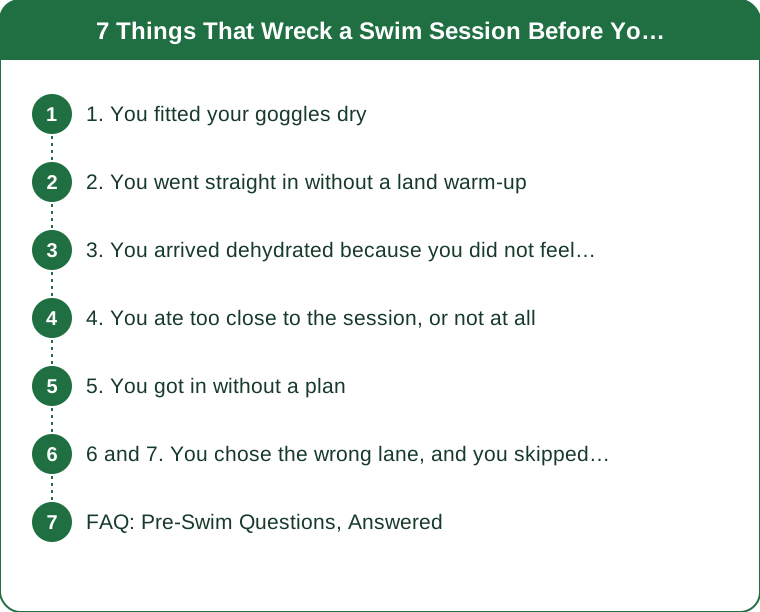
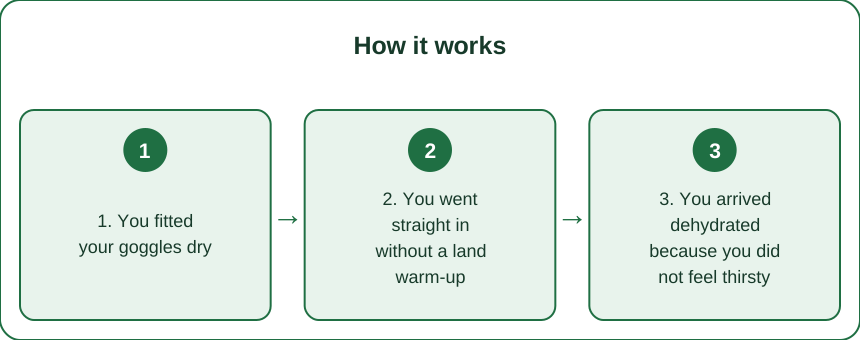
1. You fitted your goggles dry
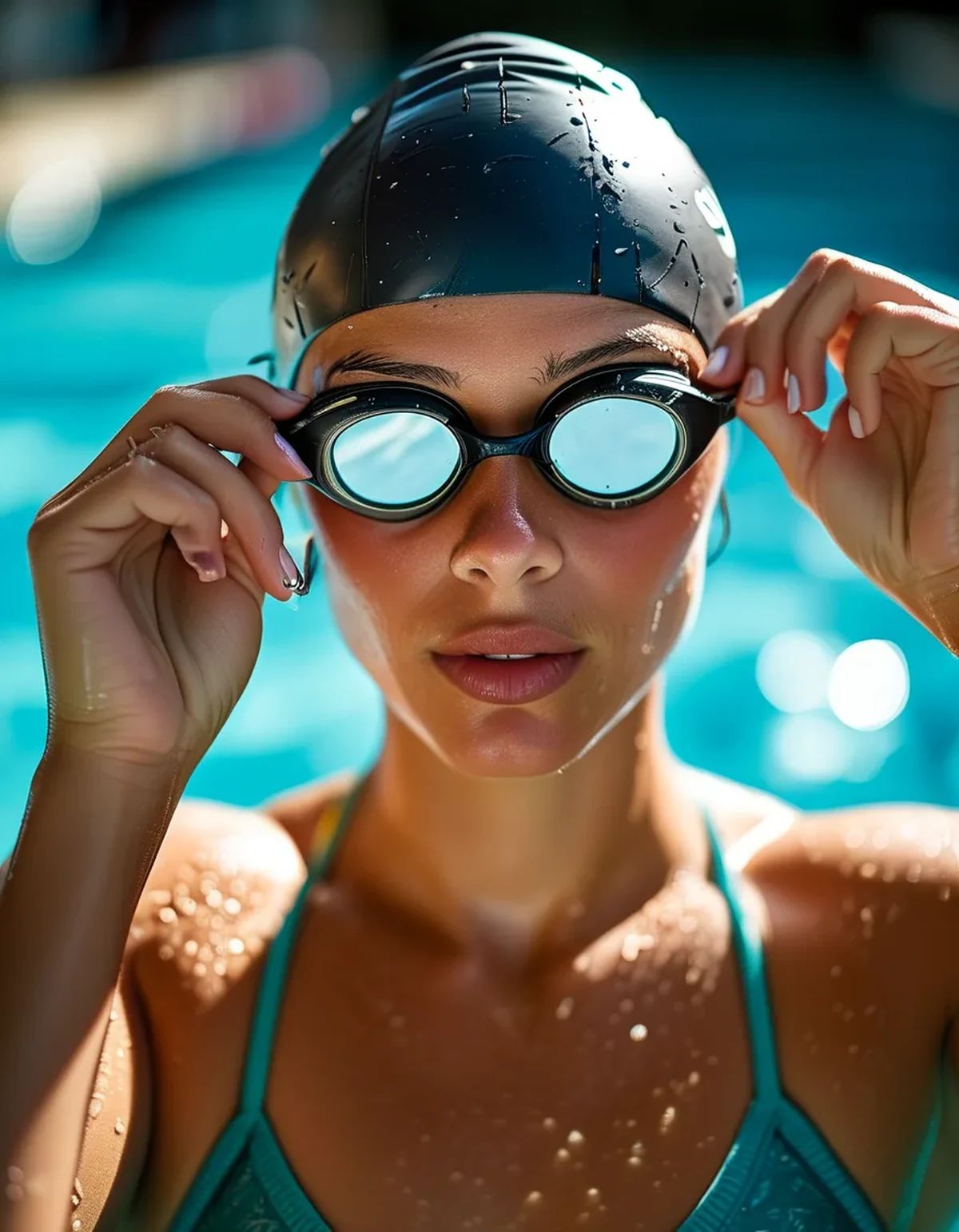
Goggles sealed against dry skin behave completely differently once your face is wet, and the adjustment you made standing on the tiles is not the adjustment you need in the water.
Dry skin has more friction, so a loose strap feels secure. The moment your face is wet, that same tension slips and the seal breaks. This is the single most common cause of stopping at the wall in the first 100m, and it costs more than the leak itself — restarting a swim after two stops takes the rhythm with it.
The fix takes fifteen seconds. Splash your face, then fit them. Press the cups onto your eye sockets without the strap and check they hold by suction alone for a second or two. If they do not, the problem is the cup shape or the nose bridge width, not the strap tension — and tightening the strap to compensate is exactly what produces goggle marks and a headache by length twenty.
The strap should sit high on the back of the head, not across the widest part, and the two sides should be even. A strap that has slipped down is the reason goggles ride up mid-set.
2. You went straight in without a land warm-up
Swimming asks the shoulder for an unusual range of motion straight away, from cold, with the body horizontal and the neck rotating. Almost no other sport starts this abruptly.
Three minutes on the poolside covers most of it: arm swings forwards and backwards, ten each; shoulder circles with the elbow leading; a few trunk rotations; and some band pull-aparts if the pool has space and you carry a band.
The practical benefit is not injury prevention in the dramatic sense. It is that your first 200m is worth something. Without a warm-up, the first block is spent getting your shoulders to open, which means the technique you practise in it is the technique you practise badly.
This matters considerably more in an indoor pool in the cooler months, when you arrive from a cold walk with your shoulders around your ears, and considerably more again if you sit at a desk all day.
3. You arrived dehydrated because you did not feel thirsty
You do not notice sweating in water, and the cooling effect of the pool suppresses thirst. Both facts push in the same direction, and it is why swimmers routinely finish sessions meaningfully dehydrated without any subjective warning.
A pool session at moderate intensity can produce sweat losses comparable to a run of the same duration, particularly in a warm indoor pool where air temperature is often held above 28°C for the comfort of people standing still.
Drink 400-500ml in the hour before you swim, and take a bottle onto the poolside. Not to drink constantly — just to have the option every few hundred metres rather than not at all.
The symptom people report is a session that feels unaccountably hard in the last third, plus a headache afterwards that gets blamed on chlorine.
4. You ate too close to the session, or not at all
Both ends of this ruin swims in different ways.
Too close is more disruptive in swimming than in most sports, because you are horizontal and pressing your torso against the water on every stroke. A full stomach produces reflux, side stitches and a genuinely miserable 45 minutes. Ninety minutes for a proper meal, thirty to forty-five for something small.
Nothing at all shows up as a session that starts well and falls apart around the 25-minute mark, particularly for morning swimmers who came straight from bed. A banana or a slice of toast 30-40 minutes beforehand is usually enough and is not enough volume to cause the first problem.
Worth knowing: the sensation of hunger after swimming is unusually strong and largely unrelated to how many calories you used. Cold water exposure drives appetite up sharply, which is why a swim can leave you ravenous in a way an equivalent run does not.
5. You got in without a plan
The default swim — get in, swim front crawl until bored, get out — is the most common session in every pool and the least productive one.
Without structure, almost everyone converges on the same moderate pace, which is fast enough to be tiring and slow enough to improve very little. It also degrades technique, because form deteriorates over a long unbroken swim and every length you swim tired is a length spent practising your worst stroke.
A plan can be extremely simple and still fix this. Warm-up 200m easy. Main set of 8 x 50m with 20 seconds rest, holding a consistent time. 100m easy. Done — that is a genuinely useful 1,000m session and it took ten seconds to design.
The rest interval is what makes it work. Short breaks let you swim each piece with intact technique, which is the entire point. Continuous swimming has its place, but it is a poor default for improving.
6 and 7. You chose the wrong lane, and you skipped the easy first 200m
6. The wrong lane
Lane choice is worth more to session quality than almost anything else in a public pool, and people consistently choose optimistically.
A lane that is slightly too fast means constant overtaking, disrupted intervals, and pushing off early to avoid being caught — all of which turn a structured session into a series of accidental races.
A lane that is too slow means stopping at the wall, waiting, and losing every interval you planned.
Watch for thirty seconds before choosing. Count how long a length takes for the people already in it, not how fast they look. And check the pattern — a lane circling properly with three swimmers is far better than a faster lane with six.
If the pool is busy and every lane is wrong, change the session rather than fighting it. Technique drills and short repeats tolerate interruption far better than a continuous distance set does.
7. Skipping the easy first 200m
The temptation, particularly when time is short, is to start the main set immediately. It reliably costs more than it saves.
Swimming has an unusually long feel-for-the-water lead-in. The proprioceptive adjustment — where the hand catches, how high the elbow sits, how the breath times — takes several hundred metres to arrive, and it does not arrive faster if you go harder.
Two hundred metres easy, deliberately slow, thinking about one thing is the highest-return part of most sessions. Pick the single cue you are working on and only that.
And the reverse applies at the end. The last 100m easy is not optional padding — it is where the session’s technique work gets consolidated at low load, and it is the difference between finishing tired and finishing wrecked.
FAQ: Pre-Swim Questions, Answered
Should I shower before getting in?
Yes, and not only for the reason posted on the wall. A warm pre-swim shower raises skin temperature and makes entry considerably less of a shock, which shortens the period of choppy, tense swimming at the start. It also genuinely reduces the amount of chloramine the pool has to deal with, which is what produces the pool smell and eye irritation.
Is a swim cap worth it if I have short hair?
Usually yes, for reasons unrelated to hair. It reduces drag noticeably, it keeps goggles from being pushed by hair movement, and it adds a small amount of warmth in a cool pool. For anyone with long hair it also prevents a great deal of chlorine damage.
How long before an open-water swim should I get in?
Longer than you think — allow a few minutes of standing in the water to acclimatise before starting, and expect the first two or three minutes of swimming to feel wrong regardless. Cold water gasp response is a genuine safety issue, not just discomfort, and entering gradually rather than diving in is the standard advice. Never swim alone in open water, and check conditions and exit points before you start.
TL;DR:
- Fit goggles with a wet face and check the suction seal without the strap; a tight strap is a symptom, not a fix.
- Three minutes of land warm-up makes your first 200m worth swimming.
- You dehydrate in water without noticing — drink beforehand and keep a bottle poolside.
- Get in with a plan, even a ten-second one, and choose your lane by watching rather than guessing.
- Easy 200m at the start and 100m at the end are the parts that make the middle work.
None of these are technique problems, which is why they persist for years in swimmers who are actively working on their stroke. Ten minutes of better preparation improves the average session more than a month of thinking about your catch — and it makes the technique work you are doing actually stick.
Keep Reading
This article is for general informational purposes only and is not medical advice. It is not a substitute for professional diagnosis or treatment. Always consult a qualified healthcare provider about your individual situation, especially before making significant changes to your diet or exercise routine.