From Pool to Lake: A Beginner's Introduction to Open Water Swimming
Quick Answer: Moving from pool to open water means learning to sight (lifting your eyes forward every 6-10 strokes to stay on course), never swimming alone, and using a tow float for visibility and rest. A wetsuit adds warmth and buoyancy for cold or nervous beginners but is optional in warm summer lakes.
Pool swimming has walls, lines, and lifeguards; open water has horizons, weeds, and a completely different relationship with the sport. The wild swimming boom has converted thousands of pool swimmers over the past few years — here’s the transition guide covering the three skills that matter and the safety architecture that makes it work.
What’s Actually Different About Open Water vs. Pool Swimming?
Open water removes the pool’s infrastructure entirely. No walls means no rest every 25 meters, which changes your pacing strategy from the ground up. No lines means navigation suddenly becomes a real skill instead of something the pool handles for you. Add variable temperature and the occasional weed encounter — startling, harmless, and practically a rite of passage — and you’ve got a new sport’s worth of context layered on top of the same stroke you already know.
How Do I Learn to Sight in Open Water?
Sighting is the signature open-water technique, and it’s the single most important skill on this list. Lift your eyes forward every 6-10 strokes to spot a landmark — a version of the “crocodile eyes” peek folded right into your normal stroke. Skip it, and you’ll arc dramatically off course without realizing it; everyone pulls slightly to one side, and open water is what finally reveals which side you favor.
Practice this in the pool first before you ever get to open water: sight toward the flags at the end of your lane while keeping your regular stroke going, so the motion is automatic before you need it in a lake with no lines to guide you.
What Safety Rules Should I Never Skip in Open Water?
- Never swim alone — go with a buddy or an organized group; open water swim communities are welcoming and available in most areas with lake or coastal access
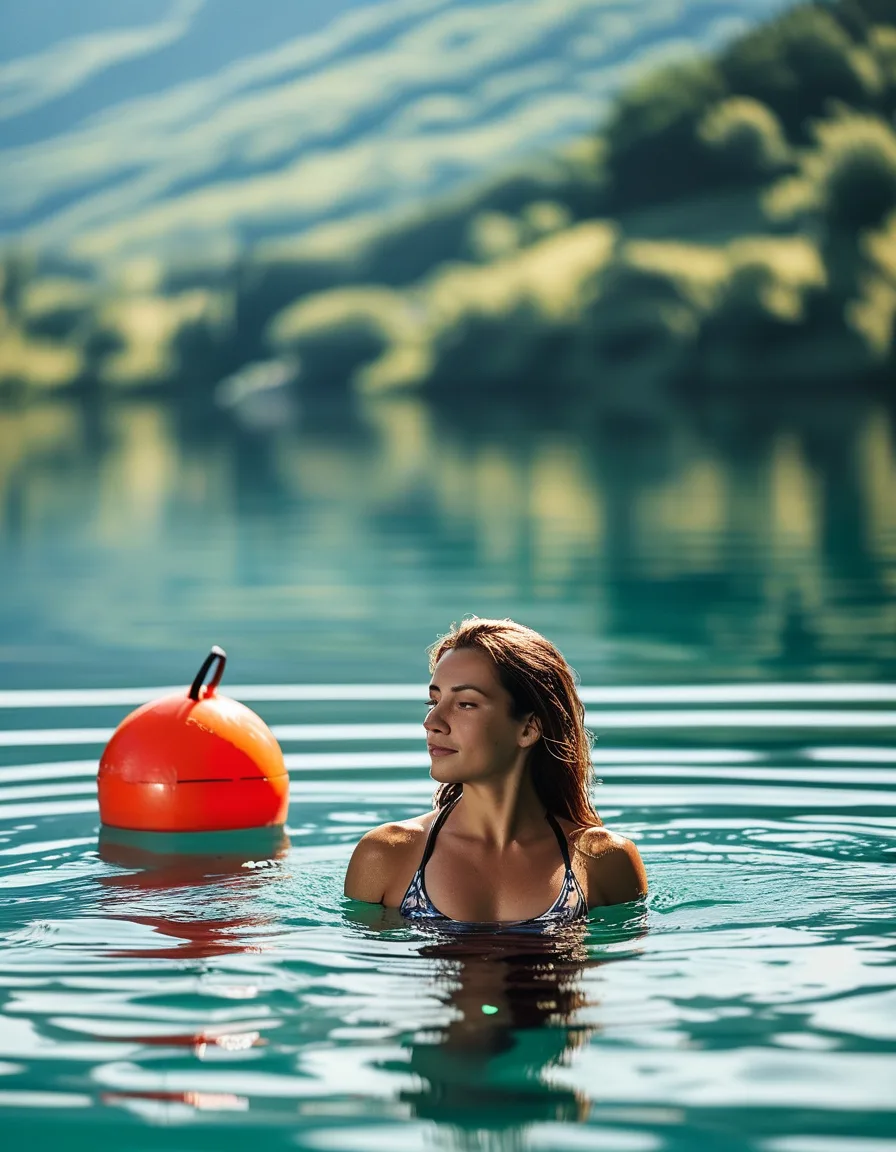
- Wear a tow float — the bright inflatable buoy trailing behind you does double duty as visibility for boats and a rest raft if you need one; it’s essentially the wild swimmer’s uniform at this point
- Know your entry point — currents, boat traffic, and exit options all need scouting before you get in, not while you’re already swimming
- Give yourself an acclimatization minute — cold water wants a gradual entry, not a plunge; the gasp reflex triggered by sudden cold immersion is real physiology, not nerves
Do I Need a Wetsuit for Open Water Swimming?
It depends on the water temperature and your own comfort level. A wetsuit adds warmth and buoyancy, which makes swimming feel notably easier — it functions almost like confidence-in-a-suit for nervous beginners, and it’s what makes cold-season open water swimming accessible at all. In warm summer lakes, it’s entirely optional; “skins” swimming (no wetsuit) is its own genuine pleasure once you’re comfortable with the environment.
If you’re not sure yet, rent before you buy — the swim-specific cut matters quite a bit, and a rental lets you test that before committing.
5 Mistakes First-Time Open Water Swimmers Make
- Skipping the acclimatization minute — jumping straight into cold water triggers the gasp reflex, which can genuinely panic an unprepared swimmer
- Swimming without a tow float — beyond the safety visibility it provides to boats, it’s also your emergency rest point if you get tired mid-swim
- Never practicing sighting in the pool first — the first time trying this technique shouldn’t be in open water with no lines to fall back on
- Choosing a first swim in choppy or unfamiliar water — a warm day, calm water, and an organized group is the low-stress way to start, not the most dramatic-looking lake you can find
- Assuming pool fitness translates directly — open water pacing is different without walls to rest against, so your first swim will likely feel harder than the same distance in a pool
Open Water Swimming FAQ
How often should I sight while swimming in open water?
Roughly every 6-10 strokes is the standard guideline — frequent enough to stay on course, infrequent enough not to disrupt your stroke rhythm. Practicing the motion in a pool first makes it feel automatic once you’re actually in open water.
Is a tow float really necessary, or just a nice-to-have?
It’s considered essential by most experienced open water swimmers, not optional — it makes you visible to boats and doubles as a rest point if you get tired or cramp mid-swim, which is a real risk with no wall to hold onto.
What should my very first open water swim look like?
A warm day, calm water, an organized group or experienced buddy, and a tow float. Save more challenging conditions — choppy water, cold temperatures, longer distances — for after you’ve built some open water experience under easier circumstances.
TL;DR:
- Open water removes pool infrastructure — no walls, no lines, variable temperature
- Sighting (checking a landmark every 6-10 strokes) is the core skill; practice it in the pool first
- Never swim alone, always wear a tow float, and give cold water an acclimatization minute
- A wetsuit adds warmth and buoyancy and is optional in warm water, useful for cold-season swimming
- Start with a warm day, calm water, and an organized group for your first swim
Sight every eight strokes, float behind you, never alone, wetsuit as training wheels. The pool taught the stroke — the lake teaches the swim, and the horizon out-motivates every wall.
Keep Reading
This article is for general informational purposes only and is not medical advice. It is not a substitute for professional diagnosis or treatment. Always consult a qualified healthcare provider about your individual situation, especially before making significant changes to your diet or exercise routine.