Caps and Goggles That Actually Work: The Fit Guide Nobody Gives Beginners
Quick Answer: Good goggles suction to your eye sockets and hold for a second or two without the strap — if they don’t, the shape is wrong for your face and no amount of strap tightening will fix it. For caps, wet and condition your hair first, twist it into a low bun, and pull the cap on crown-first. Never touch the inside of a goggle lens.
The two cheapest items in swimming cause the most quitting. Leaking goggles turn a 40-minute session into 15 minutes of chlorine-stung squinting. And the cap-versus-hair standoff has ended more pool memberships than any workout ever did.
Both are fit problems with known solutions. Here’s the gear guide every beginner deserves before they start blaming themselves.
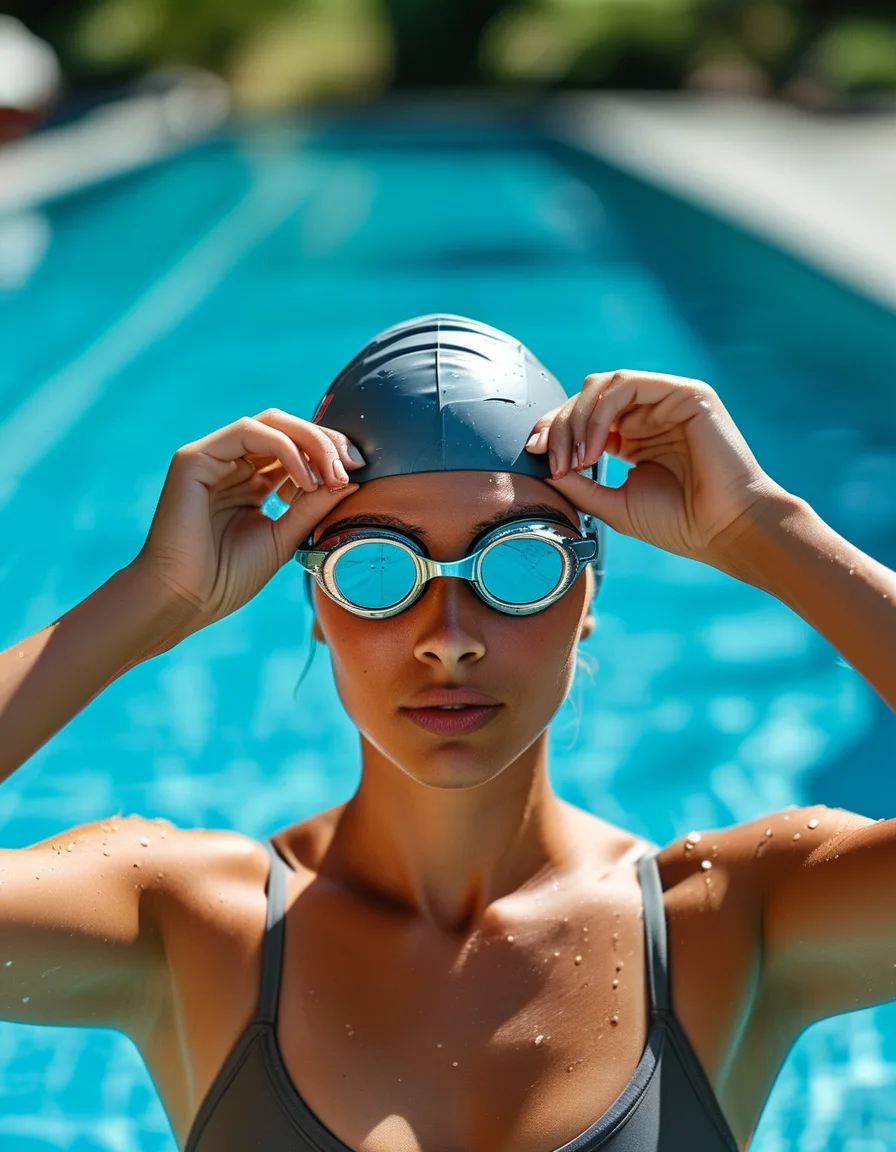
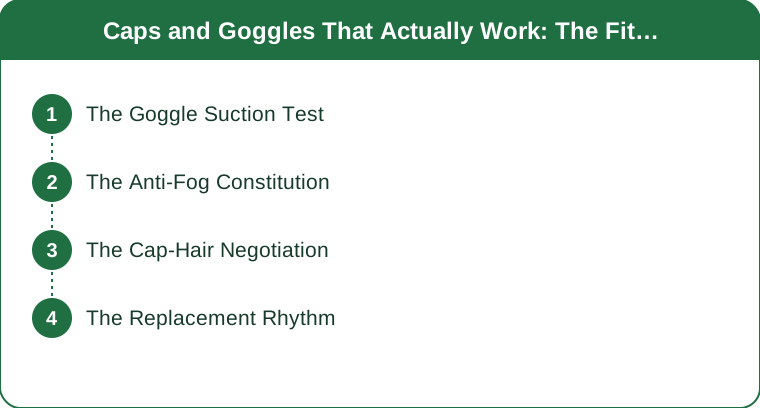
How Should Swim Goggles Fit?
Do the suction test, and do it before you buy.
Press the goggle cups onto your eye sockets without putting the strap behind your head. A pair that fits your face will suction and hold on its own for one to two seconds before falling. That’s the whole test.
This matters because of a distinction nobody explains to beginners: the seal does the sealing, and the strap only holds the goggles in place. If you’re cranking the strap tighter to stop a leak, you’re treating a fit problem with force — and you’ll get a headache and raccoon rings for your trouble.
Face shapes vary enormously, and goggle lines vary with them. Narrow bridges, wide-set eyes, deep sockets — each favors a different cup shape. Try three different shapes; one of them will suction. Your leaking pair isn’t defective. It’s mismatched to your face.
A quick fit checklist:
- Suction holds 1–2 seconds strapless.
- Strap sits high on the back of the head, roughly level with the eyes — not down on the neck.
- No red rings after 30 minutes. Rings mean too tight, not well sealed.
- Nose bridge is adjustable or correctly sized. Fixed bridges fit one face width and no other.
Why Do My Goggles Fog Up — and How Do I Stop It?
Every new pair ships with an anti-fog coating on the inside of the lens. It’s a microscopically thin film, and it has exactly one mortal enemy.
Never touch the inside of the lens. Not with a finger, not with a towel, not with the corner of your shirt to “clear it.” One wipe removes the coating permanently. This is the number-one goggle crime and it’s worth repeating every time: the inside of the lens is a no-touch zone for life.
The maintenance routine takes about 20 seconds:
- Rinse in fresh water after every swim — chlorine degrades both the coating and the silicone seal.
- Air dry, don’t towel dry.
- Store in the case, so the lenses aren’t grinding against keys and kickboards in your bag.
For goggles whose coating is already gone: a single drop of baby shampoo smeared very gently across the inside and rinsed (not scrubbed) restores a few sessions of clarity. And yes, the spit tradition works — it’s ancient, functional, and entirely a matter of personal taste.
How Do You Get a Swim Cap On Long Hair?
There’s a protocol, and it works far better than brute force.
- Wet and condition your hair first. Hair that’s already saturated with fresh water absorbs far less chlorinated water. This is the step that actually protects your hair — the cap is secondary.
- Twist into a low bun at the nape, not a high one. A high bun creates a bump that lifts the cap edge and lets water in.
- Pull the cap on crown-first, then stretch it down over the forehead last. Front-to-back drags hair forward and out.
- Tuck the edges with a finger run around the hairline.
For thick or very long hair, the two-person stretch — one person holding the cap open, one ducking into it — is completely legal and quietly traditional at every masters practice in the country.
Silicone versus latex: silicone stretches more, lasts seasons, and is far kinder to hair. Latex is cheaper, thinner, grips hair, and tests your patience. If you have long hair, buy silicone and buy it slightly oversized.
One honest expectation: a cap keeps most water out, not all of it. No cap is watertight. The pre-wet and conditioner are what protect your hair; the cap reduces drag and keeps hair out of your face.
When Should You Replace Caps and Goggles?
Goggles age in two places — the seal and the coating.
If a pair that used to seal starts leaking after a few months, the silicone has hardened. That’s normal wear, not user error. A regular swimmer replaces roughly two pairs a year, and a spare pair lives permanently in the swim bag, because a goggle failure at the wall ends the session otherwise.
Caps last until they tear at the stretch points, usually around the ears. Silicone gives you seasons; latex often gives you weeks.
Call it twelve to twenty dollars a year of maintained gear. That’s the whole difference between swimming and negotiating with your equipment.
Mini FAQ
Why do my goggles leak even when they’re tight?
Because tightness isn’t what seals goggles — cup shape is. If the suction test fails strapless, the shape is wrong for your face, and tightening only redistributes the gap while giving you a headache. Try a different cup shape rather than a tighter strap.
Do swim caps actually protect your hair from chlorine?
Partly. A cap reduces exposure but isn’t watertight, so most of the protection comes from soaking your hair in fresh water and adding conditioner before you put it on. Rinse thoroughly right after swimming too.
Should beginners buy tinted or clear goggles?
Clear or lightly smoked for indoor pools, since dark tints make lane lines harder to read under typical indoor lighting. Save mirrored and dark tints for outdoor and open-water swimming.
TL;DR:
- Suction test strapless — good goggles hold 1–2 seconds on their own. The seal seals; the strap only holds.
- Try three shapes. A leaking pair is mismatched to your face, not broken.
- Never touch the inside lens — one wipe kills the anti-fog permanently. Rinse, air dry, use the case.
- Wet and condition hair first, low bun, cap on crown-first. Silicone over latex for long hair.
- Expect ~2 pairs of goggles a year, keep a spare in the bag, and replace caps when they tear at the ears.
Keep Reading
This article is for general informational purposes only and is not medical advice. It is not a substitute for professional diagnosis or treatment. Always consult a qualified healthcare provider about your individual situation, especially before making significant changes to your diet or exercise routine.