How to Find a Swimsuit That Actually Fits Your Body
Quick Answer: The right swimsuit is a fit question, not a body question. Get the band and straps snug enough to stay put with no digging, pick a cut that supports what you want supported, and size for comfort in the shoulders and torso — a suit that pinches isn’t smaller, it’s wrong. Fit beats trend every single time.
Swimsuit shopping: the one dressing room that can undo an otherwise lovely day. Overhead lighting, three mirrors, four ounces of fabric, and a strong suspicion that everyone else finds this easier.
Here’s what the fitting room won’t tell you. Almost every “this looks terrible on me” moment is a fit failure, not a body failure — a band that’s too loose, a torso that’s too short for you, straps with no adjusters. Change the suit, not the body.
Let’s make this quick.

What actually makes a swimsuit flattering?
Fit. That’s the honest answer, and it’s not a cop-out.
A well-fitting suit in a plain color will look better in every photo than a trending cut that’s fighting you. The three things doing the work:
- The band or underbust stays level. If it rides up your back, it’s too loose — go down a band size or tighten the straps. A band that migrates upward takes all the support with it.
- Straps don’t dig or slip. Two fingers should slide under with mild resistance. Red grooves after 20 minutes mean the suit is carrying weight it wasn’t built to carry, usually because the band gave up.
- The torso length matches yours. This is the one nobody checks. If a one-piece pulls into your shoulders or creeps at the crotch, the suit’s torso is too short — not your problem to fix by sizing down.
Which swimsuit style suits my shape?
There’s no “right” body. There are cuts that play to what you already like about yours.
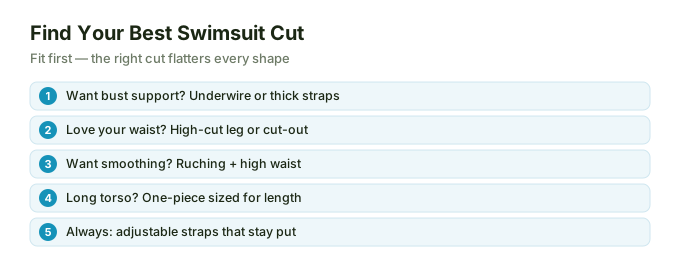
- Want more bust support? Underwire, wide-set or thicker straps, or a sports-style top with a real band. Anything sold as “one size fits most” is not offering support, it’s offering optimism.
- Want to highlight your waist? High-cut legs lengthen the line, and a belt, wrap, or side cut-out on a one-piece draws the eye to the narrowest point.
- Want tummy smoothing? Ruching hides more than a flat panel does because it disguises texture, and a high-waisted bottom sits above the spot most people are self-conscious about instead of cutting across it.
- Tall, or a long torso? Look for suits sold in a “long” torso option, or shop tankinis and two-pieces where length isn’t a fixed variable. This ends the all-day riding-up tug immediately.
- Small bust and want shape? Ruffles, textured fabric, and a bandeau with removable padding add visual volume without a wire.
What should I look for on the tag?
Five minutes of checking saves a season of regret.
- Adjustable straps. The difference between “stays put” and “fidgeting all day.” Non-negotiable in a one-piece.
- Lining and fabric weight. Hold it up to the light. If you can read your hand through it, it will be transparent when wet. Look for at least 80% polyester or a nylon-spandex blend around 18–20% spandex — that’s the range that holds shape after chlorine.
- Honest sizing. Size for the widest measurement and the longest dimension, then adjust with straps. A suit that digs in isn’t a smaller size, it’s the wrong one.
- Chlorine resistance if you swim laps. Polyester and PBT blends survive a pool for a year or more. Standard spandex starts sagging in about 3 months of chlorine.
5 Mistakes Everyone Makes
- Shopping by size instead of by measurement. Swimwear sizing is chaos across brands. Measure bust, underbust, waist, hips, and torso length once, keep the numbers on your phone, and use the brand’s actual chart. Every time.
- Trying it on for 30 seconds. Sit down. Raise both arms. Bend forward. Most fit failures only show up in motion, and a suit that’s fine standing still can be a full-time job on a beach.
- Sizing down to “hold things in.” Compression comes from cut and fabric, not from a smaller size. Too-small suits create the exact lines they’re supposed to prevent.
- Ignoring the back. You will be photographed from behind at some point. Check that the band is level and the straps sit flat before you commit.
- Wringing it out. This kills more suits than sun does. Press the water out in a towel, rinse in cold fresh water after every swim, and dry flat in shade. That routine roughly doubles the life of a suit.
The part that isn’t about the suit
You don’t have to earn a swimsuit. There’s no fitness prerequisite, no waiting until some future version of yourself shows up.
The best suit is the one you stop thinking about ten minutes in, because you’re busy getting in the water. Everyone at the pool is thinking about their own suit anyway — the average person spends approximately zero seconds evaluating yours.
Confidence is the real accessory, and unlike the suit, it doesn’t need a size chart.
FAQ
How do I know if my swimsuit is too small?
Look for the band riding up your back, straps leaving red marks after 20 minutes, fabric that goes semi-transparent when stretched, or bust tissue spilling at the underarm. Any of those means the suit is the wrong size or the wrong cut — sizing up usually looks smaller, not bigger, because the fabric stops straining.
What swimsuit style hides a tummy best?
Ruched fabric across the midsection and a high-waisted bottom do the most, because ruching disguises texture and a high waist sits above the area rather than cutting across it. A wrap-front or belted one-piece also works by redirecting the eye toward the waist.
How often should I replace a swimsuit?
A suit worn weekly in chlorine typically lasts about 3–6 months before the elastic gives up; a vacation-only suit can last several years. Replace it when the fabric stops springing back, the band no longer sits level, or the color has gone chalky — at that point no amount of adjusting will bring the support back.
TL;DR:
- Bad swimsuit moments are almost always fit problems, not body problems.
- Check three things: level band, straps that neither dig nor slip, torso length that matches yours.
- Pick a cut for what you want supported or highlighted, not for what’s trending.
- Buy by measurement, test it sitting and moving, and never size down to compress.
- Rinse in cold water, press dry in a towel, dry flat in shade — it roughly doubles the suit’s life.
Keep Reading
This article is for general informational purposes only and is not medical advice. It is not a substitute for professional diagnosis or treatment. Always consult a qualified healthcare provider about your individual situation, especially before making significant changes to your diet or exercise routine.