Why the Exact Same Swimming Distance Feels Noticeably Harder in Open Water Than in a Pool
A swimmer who covers a kilometer comfortably in a pool can find that exact same distance in open water leaves them noticeably more tired at the end, even at a similar pace and effort level in the arms and legs, and the extra fatigue isn’t really about the water itself — it’s about everything a pool quietly hands a swimmer that open water simply doesn’t.
Why a Pool Provides Constant Visual and Directional Reference
The scaffolding: a-pool-provides-constant-visual-reference-through-lane-lines-a-black-line-on-the-floor-and-fixed-walls-that-let-a-swimmer-hold-direction-with-almost-no-conscious-effort (a pool providing genuinely constant visual reference through lane lines, a black line along the floor, and fixed walls at either end, letting a swimmer hold a straight direction with almost no conscious effort required at all, per the freestyle-swimming-basics-guide logic — a-pool-providing-constant-visual-reference-through-lane-lines-a-black-line-along-the-floor-and-fixed-walls-letting-a-swimmer-hold-direction-with-almost-no-conscious-effort), and the reframe (a pool doing quiet navigational work a swimmer rarely notices is happening at all)).

Why Open Water Forces the Brain to Spend Energy on Navigation
The cost: open-water-removes-every-one-of-those-fixed-references-forcing-the-brain-to-spend-real-cognitive-energy-repeatedly-checking-direction-energy-a-pool-swim-never-has-to-spend (open water removing essentially every one of those fixed pool references at once, forcing the brain to spend real, measurable cognitive energy on repeatedly checking direction throughout the swim, energy a pool swim never actually has to spend on that task, per the open-water-swimming-intro logic — open-water-removing-every-one-of-those-fixed-pool-references-at-once-forcing-the-brain-to-spend-real-cognitive-energy-on-repeatedly-checking-direction-energy-a-pool-swim-never-has-to-spend), and the frame (fatigue in open water including a genuine mental cost, not just a physical one)).
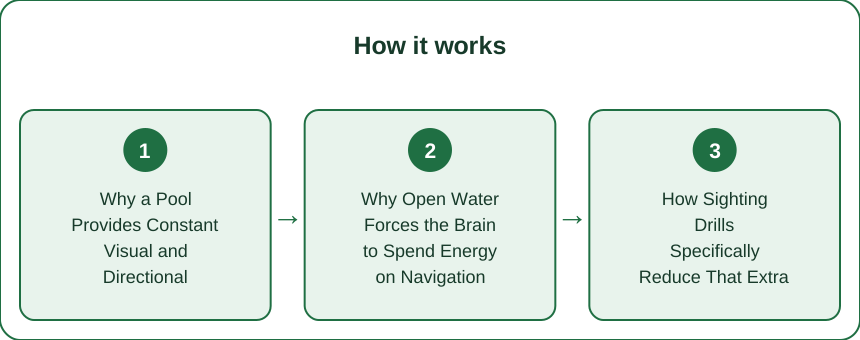
How Sighting Drills Specifically Reduce That Extra Load
The fix: practice-sighting-a-fixed-landmark-every-six-to-eight-strokes-in-training-so-direction-checking-becomes-a-quick-automatic-habit-rather-than-a-constant-effortful-recalculation-mid-swim (practicing sighting a single fixed landmark every six to eight strokes during regular training, so that direction-checking becomes a quick, genuinely automatic habit, rather than remaining a constant, effortful recalculation happening throughout the actual open water swim, per the pool-etiquette-guide logic — practicing-sighting-a-fixed-landmark-every-six-to-eight-strokes-during-regular-training-so-direction-checking-becomes-a-quick-automatic-habit-rather-than-a-constant-effortful-recalculation), and the frame (training the navigation skill deliberately, instead of letting it drain energy on race day).
A pool provides constant visual reference through lane lines and fixed walls that let a swimmer hold direction with almost no conscious effort, while open water removes all of that, forcing the brain to spend real cognitive energy repeatedly checking direction throughout the swim. Practicing sighting a fixed landmark every six to eight strokes during training turns that direction-check into a quick, automatic habit, trimming the mental cost that otherwise adds to the same physical distance.
Keep Reading
This article is for general informational purposes only and is not medical advice. It is not a substitute for professional diagnosis or treatment. Always consult a qualified healthcare provider about your individual situation, especially before making significant changes to your diet or exercise routine.