Why Your Goggles Fog More at an Outdoor Pool and the Fixes That Last
Quick Answer: Goggles fog when the humid air sealed against your eyes meets a lens that is cooler or warmer than that air, so moisture condenses on the inside surface. Outdoor pools maximise the mismatch: sun heats the lens on the deck, cool morning air chills it between sets, and warm late-summer water swings it back again. Add sunscreen migrating onto the anti-fog coating and you get lenses that white out mid-length. The fixes are temperature-matching the lens, protecting the coating, and never touching the inside.
Here is the mechanism, and the routine that keeps them clear.
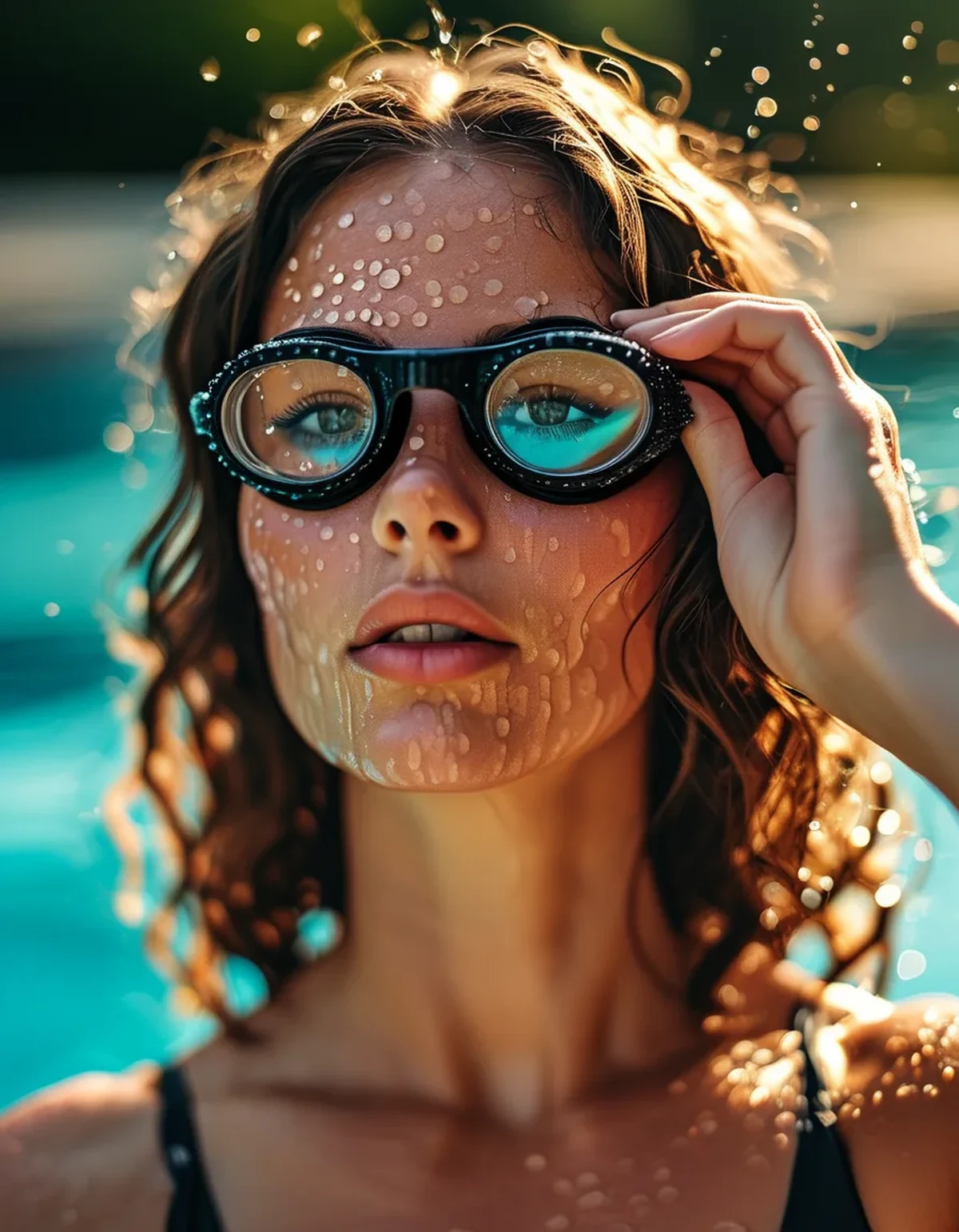
What actually causes fog inside a goggle?
A tiny greenhouse strapped to your face.
The pocket of air inside a sealed goggle is warm and saturated. It sits against your skin, warms toward body temperature, and picks up moisture from the skin around your eyes. That is unavoidable — it is what a good seal does.
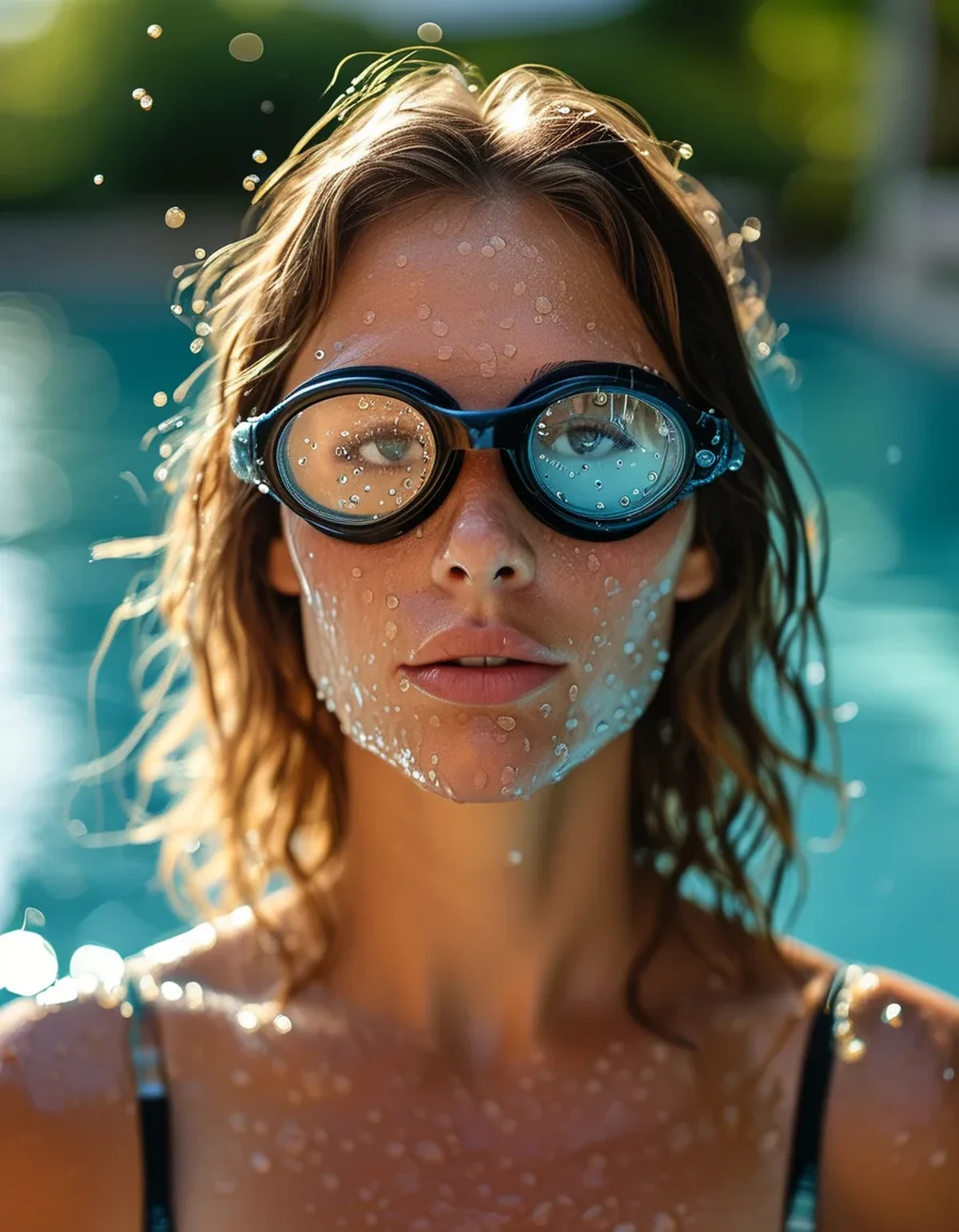
Fog forms when that moist air touches a lens surface at a different temperature. Water vapour condenses into thousands of micro-droplets on the plastic, and the droplets scatter light. The lens is not dirty; it is dewy.
Anti-fog coatings do not stop condensation — they change its shape. A factory anti-fog layer is a thin hydrophilic film that makes water spread into an invisible sheet instead of beading into droplets. The water is still there. You just see through it.
Which explains the two ways goggles go bad:
The coating wears out mechanically. Every fingertip rub across the inside of the lens strips a little of the film. Rubbing the inside is the single most damaging thing a swimmer does to goggles, and almost everyone does it reflexively.
The coating gets contaminated. Sunscreen, sweat, and pool water minerals settle onto the film and clog it. A contaminated coating beads water exactly like an uncoated lens.
Once you know fog is temperature plus surface condition, the outdoor-pool problem explains itself.
Why is an outdoor pool so much worse for fog than an indoor one?
Because every fog ingredient runs bigger outside, especially in late summer.
The temperature swings are wider. An indoor pool hall holds air and water within a few degrees of each other all day. An outdoor pool in late August has cool morning air over water that has been warming for three months, then hot afternoon sun over that same water. Every transition — deck to water, set to rest — moves your lens temperature, and every move invites condensation.
The sun heats your lenses directly. Goggles sitting on the deck or pushed up on your forehead between sets absorb radiant heat fast, and dark tinted lenses absorb more. Put hot goggles onto a face and dive into water several degrees cooler, and the inside surface fogs almost instantly.
Sunscreen is everywhere at an outdoor pool. It is on your face, your hands, and your hairline, and it migrates onto the inside of the lens when you adjust them with product on your fingers. Sunscreen film is the most common reason an expensive pair fogs worse after two weeks of summer than a cheap pair does new.
Wind cools the outside of the lens between sets, steepening the inside-outside temperature difference in a way still indoor air never does.
None of this happens because your goggles are bad. It happens because the outdoor environment attacks the two things clarity depends on: stable temperature and a clean coating.
5 Mistakes Everyone Makes With Swim Goggles
1. Rubbing the inside of the lens. One wipe to clear fog mid-session strips coating and guarantees worse fog next time. If you must clear them, dunk and shake, never rub. The habit is hard to break and worth breaking.
2. Leaving them lens-up on the pool deck. Ten minutes in direct late-summer sun cooks the lens, warps cheap frames, and bakes any sunscreen residue permanently into the coating. Shade them under a towel or drop them in your swim bag.
3. Applying sunscreen last. Sunscreen needs to go on 15 minutes before you swim — and before goggles ever touch your face. Apply, let it set, rinse your fingertips, then handle your goggles. The order matters more than the brand of either product.
4. Rinsing them in hot water. Hot taps and showers accelerate coating breakdown and can deform the seal. Cool fresh water after every swim is the entire care routine: rinse, shake, air dry out of the sun, then case.
5. Storing them wet in a sealed bag. A soaked goggle sealed in plastic grows film and mildew at the seal line and keeps the coating wet, which shortens its life. Dry first, then case. A hard case with vents is the best few dollars in swimming.
How do you keep goggles clear for a whole outdoor session?
Match the lens to the water, protect the coating, and refresh it when it dies.
Dunk before you start. Hold the goggles in the pool for ten seconds before putting them on. This sets the lens to water temperature and removes the deck-heat mismatch that causes the first-length whiteout. Swimmers who do this one thing report most of their fog gone.
Keep the inside untouchable. Handle goggles by the frame and strap only. If fog builds mid-set, flood and shake at the wall.
Re-treat when the factory coating dies. No coating lasts forever — a season of regular swimming is a normal lifespan. After that: a drop of baby shampoo spread thin on the inside and rinsed lightly leaves a film that sheets water the same way the factory layer did. Commercial anti-fog sprays do the job with more consistency. The old spit trick works on the same principle and lasts about one set.
Check the fit, because leaks read as fog. A goggle that lets water seep in looks foggy from droplets on the inside. Press the cups onto your eyes without the strap: they should hold by suction for a couple of seconds. If they fall, the seal has hardened or the size is wrong, and no anti-fog will fix it.
End-of-season note: if your pair is on its second summer of chlorine, sun, and sunscreen, the seals are stiffening and the coating is done. Outdoor season has a few weeks left across most of the country — retire them at the end of it rather than starting next summer annoyed.
FAQ: Goggle Fog Questions, Answered
Why do my goggles fog on the first length and then stop?
Because they started warmer or cooler than the water and equalised as you swam. Dunk them in the pool for ten seconds before putting them on and the first-length fog mostly disappears.
Does spitting in goggles actually work?
Yes, briefly. Saliva forms a thin film that sheets condensation the way an anti-fog coating does, and it washes away within a set or two. Baby shampoo or a purpose-made spray does the same job for a full session.
Why did my new goggles start fogging after two weeks?
Almost always sunscreen and fingertip contact contaminating the coating, not a factory fault. Change the order you apply sunscreen, stop touching the inside, and rinse cool after every swim.
Are tinted or mirrored goggles worse for fog outdoors?
They absorb more radiant heat on the deck, so they arrive at the water warmer and fog harder on entry. The dunk-first habit matters most with dark lenses.
TL;DR:
- Fog is condensation from the warm humid air sealed against your eyes meeting a lens at a different temperature.
- Outdoor pools maximise it: sun-heated lenses, cool morning air, warm late-summer water, and sunscreen contaminating the coating.
- Dunk goggles in the pool before wearing, never touch the inside, apply sunscreen 15 minutes before handling them, rinse cool and dry shaded.
- When the factory coating dies, a thin film of baby shampoo or an anti-fog spray restores the sheeting effect.
Try the ten-second dunk at your next swim. It fixes more fog than any product does.
Keep Reading
This article is for general informational purposes only and is not medical advice. It is not a substitute for professional diagnosis or treatment. Always consult a qualified healthcare provider about your individual situation, especially before making significant changes to your diet or exercise routine.